Articles by "Australia"
Showing posts with label Australia. Show all posts
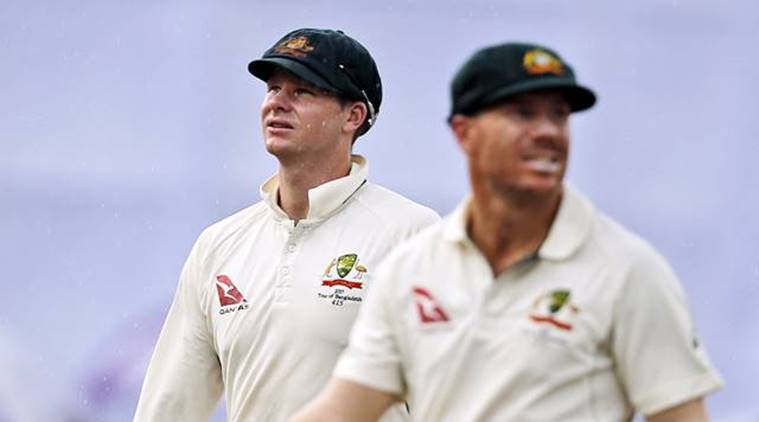
Steve Smith and David Warner

Steve Smith and David Warner, captain and vice-captain of the Australian cricket team, have been suspended for one year for their role in the scandal of the match against South Africa in Cape Town. Smith acknowledged that during the same cheated, using a tape to scrape the ball and change its trajectory, after television cameras were caught his teammate Cameron Bancroft, also sanctioned with nine months. The three players have already been sent home from the concentration in South African lands.

All three may participate in club competitions, but not in international tournaments with their selection during the duration of their sanctions. The premeditated trap they used against South Africa has shaken the world of cricket not only in Australia.

"David Warner will not occupy relevant positions in the future," said the Australian cricket team. While Smith and Bancroft must wait two years to do it again, and "even then it will depend on acceptance by the fans," he added. In addition, each of them must complete one hundred hours of community services before being eligible again.

Also Read: The Scandalous Trap That Has Deeply Disappointed Australia

Smith and Bancroft have been found guilty of knowing the cheating plan, but according to the Australian Federation's investigations, Warner would have been the instigator.

"The Federation understands the anger of the fans and the Australian community about these events as they go against the integrity and reputation of Australian cricket and sport and the sanctions must reflect that," said David Peever, president of the association.

"They are significant penalties for professional players and this body has not imposed them lightly. We hope that after the suspension period players will be able to play the sport they love again and rebuild their careers" he said.
Australia captain Steve Smith

Australian squad captain Steve Smith, vice-president David Warner and player Cameron Bancroft, have been sent home from South Africa as a result of their involvement in the team's attempt to cheat on Saturday, during a test game against South Africa Series, the most prestigious game formula for sport. So they will not play in the next match between the two national teams - the tournament is made of different matches - which will start on Friday in Johannesburg. Smith will be replaced by the player Tim Paine in the role of captain.

In short, the scandal in which the three players are involved concerned the attempt to secretly tamper the ball with which they were disputing the game against South Africa. This attempted tampering was taken by the cameras and that's why the managers had to admit it.

For now, Smith, Warner and Bancroft have not been suspended or driven out by the national cricket team, but it is not excluded that in the next there may be serious repercussions on their career for this scandal. Australia coach, Darren Lehmann, who according to Cricket Australia CEO James Sutherland had nothing to do with trying to cheat, will not leave his place.
Australia Cricket Team captain Steve Smith

A piece of tape and a whole sport is shaken. In Australia, where cricket is king, the captain of the Australian team is caught in a cheating scandal. The reason? This piece of ribbon, to change its trajectory.

In the Commonwealth, cricket is king. The sport of bat attracts more than one billion and a half of followers, around the world and in particular in Australia, India, South Africa... No wonder that when a scandal explodes in this sport of bat, it shakes a whole country.

That's what is happening right now in Australia, where one of the newspapers is focused on cheating on his national team captain, Steve Smith. Sunday, during a test match against South Africa, the most prestigious format, over five days, he admitted to cheating while trying to destabilize the trajectory of the ball, with tape, with the complicity of his teammate Cameron Bancroft. Except that the subterfuge was caught by the cameras before the latter tries to hide the action by hiding the adhesive in his pants.

Also Read: The Australian Cricket Team Caught In The Act Of Cheating

A national tragedy for Australians, which even pushed Prime Minister Malcolm Turnbull to intervene. He evokes a bitter disappointment. It completely defies understanding that the Australian cricket team is involved in cheating. In the eyes of Australians, the captaincy of the national cricket team as prestigious as his prime minister. Seeing such a maneuver at the head of the national team, especially in a sport of "Gentlemen" is a source of disappointment, far from the Australian mind.

The Australian press has seized the case, claiming the shame of such a case, henceforth nicknamed "SandPaperGate". Even the old legends of cricket are indignant. They are nearly 450 to have worn the green cap of the team, which is considered an honor. Former pitcher Rodney Hogg lamented on Twitter: "Unfortunately, it's pure cheating and Steve Smith has to resign from his position."

Jamie Fuller, chief executive of Skins, sportswear manufacturer, "Cricket Australia (CA), the governing body of sport, must show good governance in the face of scandal. If they do not, there will not be only the national team that will be shamed. It will be you all. It will be cricket. It will be us all."

For the moment, Smith has been given a suspension match by the International Cricket Council. But the case should keep talking.

Especially since sport is extremely popular in Commonwealth countries. Thus, for example, in 2017, the Anglo-Welsh Cricket Federation, gave up the rights of the competition of its national team for nearly 1.25 billion euros.
Australia Ball Tampering

Australia is in a "shock" state. In a country where cricket is the national sport and captain of the national team of this sport is considered the second most important job in the country after the prime minister, the crude confession of Steve Smith, a player who occupies currently that position, has been a real blow.

Smith acknowledged on Sunday that he had cheated, and what's worse, he had done it premeditatedly. The Australian player confessed that he had planned to alter the state of the ball to change his trajectory during a game against South Africa played on Saturday in Cape Town.

His partner Cameron Bancroft used an adhesive tape to collect abrasive particles from the field and rub the ball with them to scrape it and make its unpredictable trajectory. However the cameras chased him doing it, but when he realized he tried to hide the tape by putting it in his pants.

Smith confessed the facts in a press conference that ended up causing a real scandal in Australia, where the controversial episode has jumped to all media.

Also Read: The Australian Cricket Team Caught In The Act Of Cheating

Even the Prime Minister, Malcolm Turnbull, acknowledged being "shocked" and having suffered a "bitter disappointment". "It is completely impossible to assume that the Australian team is involved in a trap," he said. And is that cricket, already considered a sport of gentlemen, is more than a sport in Australia, rooted in the soul and ideals of the country.

Putting on the green cap of the national team is considered sacred in Australia, as it is an honor that only 450 people have been able to enjoy. That is why Turnbull asked the Australian Cricket Federation ('Cricket Australia') for a quick and forceful action to punish those who are responsible.

The trap and its subsequent confession have already had consequences among the sponsors of the Australian team, who have transmitted their discomfort. For example Jamie Fuller, executive director of the specialized clothing brand 'Skins', who on an advertising page in the press wrote that "cricket is part of our national soul and defines us, what is right and what is not, what that is good and what is wrong. Cricket Australia must act. If it does not, it will not be only the national team that will be covered in shame, it will all be you, it will be cricket, we will be all of us ».

Other sponsors, including Qantas Airways, Sanitarium cereals, Lion brewer, sportswear brand ASICS, Commonwealth Bank of Australia, and Toyota, said Monday that they are studying their relationship with the Australian national team after the scandal and waiting for the investigation of 'Cricket Australia'.

Before any future decisions that the Australian federation can make, Steve Smith was stripped of the national captaincy on Sunday and suspended for a match by the International Cricket Council (ICC), and on Monday it became known that the player has left a He also agreed to stop being the captain of the Rajasthan Royals, the franchise of the Indian cricket league where he plays.

For his part, Cameron Bancroft, who was hunted by the cameras carrying out the trap designed by his captain and a group of players of the Australian team, received three penalty points and a fine of seventy-five percent of his income for the party but escaped a suspension.


Cameron Bancroft of the Australian cricket team


In Australia, cricket is the king of sports and the national team is ready for anything to win a match. To go too far, like Saturday, March 24 when the Australians tried a rough cheating to lose their opponents, South Africa, during a match in Cape Town. The scene may seem surreal, but the scandal is immense.

Everything happened live, under the eyes of the cameras, reports our correspondent in Melbourne, Caroline Lafargue. As South Africa leads, Cameron Bancroft, a player on the Australian team, pulls a piece of yellow, dust-coated tape from his pocket. A sort of improvised sandpaper that he intends to use to sand the ball and change its trajectory. All this to surprise the South African drummer.

Problem: One of the referees notices the little carousel of Cameron Bancroft, who panics and tries to hide his yellow tape in his pants. The match is then immediately stopped. Then follows a long meeting behind closed doors, explains our correspondent in Johannesburg, Noé Hochet-Bodin.

Pursued by the International Federation, Cameron Bancroft acknowledges the fault: " I saw an opportunity to use tape so that the ball could stick to pellets on the ground and so that it could change direction, " says the player.

"I'm not proud of that"

A premeditated " opportunity ", as Steve Smith, the captain of this Australian team, admits in a press conference. " The team knew it. We talked about it at lunch. I'm not proud of that. It's not in the spirit of sport. This raises questions about my integrity and the integrity of the team as a whole, "the athlete apologizes before" promising "that such a situation will not happen again.

A mea culpa that does not prevent the Australian Federation of Cricket to conduct the investigation and to commit to cleaning the team. For the moment, only the International Cricket Council has intervened against the cheats: he suspended the captain for a match and imposed a big fine on Cameron Bancroft. In Australia, humiliation is in any case total.
The Ashes series has finally come to an end but Pakistani umpire Aleem Dar has come under the wrath of both Australia and England. The fifth and last Test of the series was ended because of bad light at a time when England needed 21 runs in 4 overs.

[caption id="attachment_2257" align="alignright" width="264"]Michael Clarke: “I remember Aleem touching me and I asked him politely to not touch me because if I touched him I'd be suspended for three matches.” Michael Clarke: “I remember Aleem touching me and I asked him politely to not touch me because if I touched him I'd be suspended for three matches.”[/caption]

Therefore, the English media came out with all guns blazing against umpires for ‘spoiling’ the match’s result. England and Wales Cricket Board’s chairman Giles Clarke demanded the International Cricket Council (ICC) to bend the light rules.

On the other hand, the Australian media was also fuming about Aleem Dar for stopping Aussies captain Michael Clarke with his hand. It happened when Clarke – seeing a clear defeat – urged the umpires to check light. When Dar took out light meter, Clarke tried to have a look by himself at the reading, which forced Dar to push Clarke a little bit. It was all to hurt the pride of the ‘prince’.

"I remember Aleem touching me and I asked him politely to not touch me because if I touched him I'd be suspended for three matches,” Clarke said.

"That's all I can remember, coincidentally.

It’s quite surprising that Clarke was pointing his finger at three-time best umpire Aleem Dar and Kumar Dharmasena, who won the David Shepherd Trophy the last year.
English soil and no controversy? Impossible. As fans are trying to forget Ian Bell’s runout case, Stuart Broad’s disputed notout today in Trent Bridge has added a new chapter in the history of controversies.

[caption id="attachment_1846" align="alignright" width="300"]The controversial moment (Photo: PA Photos) The controversial moment (Photo: PA Photos)[/caption]

In the first Test between the archrivals, the hosts have firmed their grip, thanks to a seventh-wicket partnership between Broad and Bell. But when the score was 297 and England were leading by 232, an Ashton Agar’s delivery nibbled away Braod’s bat, going straight to wicket-keeper Brad Haddin, touching his pad and then into the hands of Michael Clarke in the first slip. As Australia started celebrating the end of a key partnership, Aleem Dar remained unmoved. Broad was not out despite being out. The tourists had already used their two reviews, so they lost a crucial wicket.

It was quite clear from the replay that the ball touched the bat. Now fingers started pointing at Broad that why he should not have left the crease. Commentator Michael Holding went so far that he said Broad did what had been done by West Indies wicket-keeper Dinesh Ramdin in the 2013 Champions Trophy, means an act against the game’s spirit. Pakistan captain Misbah-ul-Haq lost his wicket after Ramdin pretending taking a catch, but the ball had actually touched the ground. The ICC slapped a two-match ban on Ramdin after that.

So Broad’s notout helped England reach 326 for six after three days. The partnership between the two now stands at 108, with Bell at 95 and Broad at 47. On the other hand, Australia, whose bowlers were performing as well as they did in the first innings, returned with a heavy heart.

Overall, the third day at Trent Bridge proved lucky for the hosts. Bell was saved by the UDRS when he was declared lbw by umpire Kumar Dharmasena on 34. Ironically, the same UDRS also saved Broad because Australia were left with no reviews.

The expressions of anger on Australian players looked quite strange. The same who are (in)famous for not moving an inch until the umpire’s decision are now sermonising for the “spirit of the game”.  Set aside Ricky Ponting, the present captain Michael Clarke is no angel, too. In the 2008 series against India, he was out on Anil Kumble’s ball, but a wrong decision by the umpire rescued him. He repeated the same in 2012 Ashes. So protesting on such an issue does not suit them.

Then came Shane Warne, posting tweets against Aleem Dar, including this one: "We all make mistakes & it's a very tough job being an umpire, but when Dar continually makes crucial mistakes why does he keep getting a gig."

Mr Warne, talk some sense. Please.
Australia surprised everybody when they included Ashton Agar in the team before the first Test of the 2013 Ashes. How come a 19-year-old boy with the experience of just 10 first-class matches under his belt could be selected in the team facing a critical phase. Given the present performance of Australia, the team’s fans were not hoping much from the players, but Agar’s fireworks on just second day of his international career have revived their hopes.

[caption id="attachment_1838" align="alignright" width="225"]Although Agar could not make a century, he played a record innings as No. 11 player. (Photo: Getty Images) Although Agar could not make a century, he played a record innings as No. 11 player. (Photo: Getty Images)[/caption]

Surprisingly, Agar’s feat was not with the ball, but wit the ball. At a stage when Australia were 117 for nine and had come back to their senses after bowling out England on just 215 in the first innings, Agar made record partnership on the 10th wicket Phillip Hughes and also scored record 98 runs as the 11th player.

When the game was in full grasp of English bowlers and they took five wickets of the opponents within just five more runs, a 19-year-old player put in an unbelievable innings.

Agar’s innings was a combination of magnificent shots. Initially, Hughes was trying to play as much balls as possible to because England needed just one wicket to finish the visitors’ innings. But soon he realised that he was underrating Agar. The youngster had completed his fifty but there was much more left. The duo needed to salvage the work done by the team’s bowlers. And they did it and did it fabulously.

Both the players added 163-run partnership on the 10th wicket, making a world record. They broke the earlier record of 151-run partnership set by New Zealand’s Brian Hastings and Richard Collinge. Pakistan’s Azhar Mahmood and Mushtaq Ahmed also made a partnership of 151 runs on the last wicket in 1997. Now the joint record has been claimed by Australia.

Best last-wicket partnerships


BatsmenForRunsvs.YearGround
Philip Hughes - Ashton AgarAustralia Aus163England Eng2013Nottingham
Brian Hastings - Richard CollingeNew Zealand NZ151Pakistan Pak1973Auckland
Azhar Mahmood - Mushtaq AhmedPakistan Pak143South Africa SA1997Rawalpindi
Denesh Ramdin - Tino BestWest Indies WI133England Eng2012Birmingham
Wasim Raja - Wasim BariPakistan Pak133West Indies WI1977Bridgetown

When Agar was just two runs from making a record century by an eleventh player, his innings met an anticlimax. In an attempt to play an uppish delivery by Stuart Broad to midwicket, he gave catch to Graeme Swann. Agar got an standing ovation from the spectators for his brilliant innings, studded with 12 fours and two sixes.

However, despite the misfortune, Agar’s was the biggest innings by an eleventh player. The record was earlier held by West Indies Tino Best, who scored 95 runs against England last year.

Best innings from no. 11 batsman


BatsmanForRunsvs.GroundYear
Ashton AgarAustralia Aus98England EngNottingham2013
Tino BestWest Indies WI95England EngBirmingham2012
Zaheer KhanIndia Ind75Bangladesh BanDhaka2004
Richard CollingeNew Zealand NZ68*Pakistan PakAuckland1973
Albert VoglerSouth Africa SA62*England EngCape Town1906

Hughes remained notout with 81 off 131, scoring nine fours. Both batsmen helped Australia reach 280, taking a 65-run lead over the hosts.

Let’s see how Australia utilise the brave innings of the ‘last warrior’. England also have chance to perform up to the mark in the second innings to avert any unexpected result.
The last round match of the 2013 Champions Trophy played between Australia and Sri Lanka unexpectedly entered in exciting phase, and before the Sri Lankan fans suffered heart attack, Tillakaratne Dilshan ended the Aussies’ campaign with an unbelievable catch. The 20-run victory helped Sri Lanka to qualify for the semi-finals and it also sent packing Australia and New Zealand form the tournament.

[caption id="attachment_1684" align="alignright" width="300"]The moment of triumph (Photo: AFP) The moment of triumph (Photo: AFP)[/caption]

Though it was a pleasant end for Sri Lanka, Australia did ruffle a few feathers before quitting. They were supposed to achieve the 254-run target in 29.1 overs to qualify for the final four, which they couldn’t. However, they also did not allow the opponents to gain the first position in the group as Sri Lanka would have got the top slot had Australia were dismissed before 164. Moreover, Australia also lulled New Zealand into a false sense of security as the Black Caps were pinning all their hopes on Australia to proceed to the next round.

Australian captain George Bailey won toss and put the opponents into bat in the match that was going to decide the fate of three teams. After the in-form Kumar Sangakkara failed to perform in the crucial match, it was Mahela Jayawardene who faded away all the hopes of Australia and New Zealand to reach the semi-finals with his unbeaten 84 runs. After Kusal Perera and Sangakkara left the ground on just 20 runs, Dilshan and Lahiru Thirimanne gave their team some sense of relief by adding 72 runs together. After Dilshan was dismissed on 34, Jayawardene came to stay till the end. Thirimanne’s 57 and Dinesh Chandimal’s 31 also helped Sri Lanka amass a respectable total at the loss of eight wickets.

Australia’s Mitchell Johnson took three while Clint McKay, James Faulkner and Xavier Doherty took one wicket apiece.

Australia’s actual aim was to score 254 runs in a maximum of 29.1 overs and they started accordingly. But they failed to defend their wickets. When the 30th over started, Australia had lost their eight wickets on 189. Australia had been ruled out of the tournament by the time, but it was yet to be decided which was going to be the last team to qualify for the semis, because if the Aussies had won the match, New Zealand, and not Sri Lanka, would have reached the semi-finals.

[caption id="attachment_1685" align="alignright" width="278"]Mahela Jayawardene crossed the 11,000-run milestone in the ODIs during his undefeated 84 runs’ innings (Photo: ICC) Mahela Jayawardene crossed the 11,000-run milestone in the ODIs during his undefeated 84 runs’ innings (Photo: ICC)[/caption]

Glenn Maxwell’s quick 32 and Adam Voges’ put some resistance, but actually it was the last-wicket partnership of 41 runs that reduced the Sri Lanka’s thousands of fans to silence. The crowd broke into a thunderous applause when Voges’ wicket fell on 192 as he was Australia’s last hope, because scoring 62 runs in 20 overs with one wicket remaining seemed a distant dream.

But McKay and Doherty played responsibly in the end and guided the match to a position where Australia, and New Zealand, started hoping that Sri Lanka would be returning home after the match. Bu when Australia required another 21 runs in 46 balls, Dilshan rounded off the competition with a mind-boggling catch. Nuwan Kulasekara took three wicket while Rangana Herath took two. Shaminda Eranga, Angelo Mathews, Lasith Malinga and Dilshan each claim wicket.

The man-of-the-match award went to Jayawardene for playing a key role in the team’s victory by his unbeaten 84 off 81, which included 11 fours.

Sri Lanka missed the chance to restrict Australia to 164. By doing they so, they would have got the top slot in their group and would face South Africa in the semi-final. Now as they are at the second position, they will go head to head with India, the only unbeaten side in the tournament so far.

The first semi-final will be played at The Oval between England and South Africa on June 19. In the second semi-final, India will lock horns with Sri Lanka on June 20 in Cardiff.

The moment of triumph (Photo: AFP)

Mahela Jayawardene crossed the 11,000-run milestone in the ODIs during his undefeated 84 runs’ innings (Photo: ICC)

Australia vs Sri Lanka


Champions Trophy 2013, Match 12


June 17, 2013


Venue: The Oval


Result: Sri Lanka won by 20 runs


Man of the match: Mahela Jayawardene


سری لنکاRunsBalls4s6s
Kusal Pereralbw b Johnson4310
Tillakaratne Dilshanc Watson b Doherty345810
Kumar Sangakkarac Maxwell b McKay31100
Lahiru Thirimannec Watson b Johnson57640
Mahela Jayawardenenot out8481110
Angelo Mathewsb Faulkner122010
Dinesh Chnadimalc Hughes b Johnson313211
Nuwan Kulasekararun out (Maxwell/Wade)6500
Rangana Herathrun out (Marsh/Faulkner)2500
Lasith Malinganot out2100
Extras(byes 5, leg-byes 7,

wides 4, no-balls 2)
18
Total(8 wickets; 50 overs)253


Australia (bowling)OversMaidensRunsWickets
Mitchell Johnson100483
Clint McKay101511
James Faulkner90601
Shane Watson40140
Xavier Doherty101301


آسٹریلیاTargte: 254 runsRunsBalls4s6s
Shane Watsonb Kulasekara5710
Phillip Hughesc †Sangakkara b Kulasekara131030
Glenn Maxwellb Malinga322051
George Baileyrun out (Kulasekara)4700
Adam Vogesc Eranga b Herath496220
Mitchell Marshb Mathews41400
Matthew Wadec Dilshan b Kulasekara312341
James Faulknerc †Sangakkara b Herath171430
Mitchell Johnsonc Kulasekara b Eranga4410
Clint McKayc & b Dilshan305820
Xavier Dohertynot out153700
Extras(leg-byes 11, wides 17, no-balls 1)29
Total(all out; 42.3 overs)233


Sri Lanka (bowling)OversMaidensRunsWickets
Shaminda Eranga81401
Nuwan Kulasekara90423
Lasith Malinga90601
Rangana Herath100482
Angelo Mathews30211


Australia vs Sri Lanka - Match Information
Event:         ICC Champions Trophy
This Match: 12th Match ODI (Day/Night)
Toss: Australia won the toss and choose to Field
Country: England
City: London
Venue: Kennington Oval
Umpire 1: Marais Erasmus
Umpire 2: Tony Hill
TV Umpire: Aleem Dar
Referee: Javagal Srinath


Sri Lanka Team: Tillakaratne Dilshan, Kushal Janith Perera, Kumar Sangakkara (Wicket Keeper), Mahela Jayawardene, Dinesh Chandimal, Lahiru Thirimanne, Angelo Mathews (Captain), Nuwan Kulasekara, Rangana Herath, Shaminda Eranga, Lasith Malinga

Australia Squad: Shane Watson, Matthew Wade (Wicket Keeper), Phillip Hughes, George Bailey (Captain), Adam Voges, Mitchell Marsh, Glenn Maxwell, Mitchell Johnson, James Faulkner, Clint McKay, Xavier Doherty
The lucky New Zealand. In a crucial match when they were in hot water, the nature intervened and they earned a valuable point to retain the top position in Group A. On the other hand, Australia, who had been overcome by the hosts England in their first match, were eyeing victory but rain washed away the match and it ended in a draw.

[caption id="attachment_1607" align="alignright" width="300"]Dark clouds darkened Australia’s mood as their survival in the tournament lies in tatters (Photo: AFP) Dark clouds darkened Australia’s mood as their survival in the tournament lies in tatters (Photo: AFP)[/caption]

Australia were in a better position after setting a 244-run target, mainly due to Adam Voges’ 71 and captain George  Bailey’s 55 and the team’s decision to bat first after winning the toss. Especially, after dismissing an in-form Martin Guptill and wicket-keeper Luke Ronchi on just 26, the Aussies were in full control of the game. Kane Williamson and Ross Taylor then added 25 more runs before rain started because if which the match was later abandoned.

The good thing about Australia’s innings was the recovery they made after two of their players – Shane Watson and Phillip Hughes – were dismissed on 10 runs. Bailey then made successive partnerships of 64 and 77 with wicket-keeper Matthew Wade and Voges, respectively to make things worse for New Zealand. A slow innings by Wade prevented Australia from amassing a big total. Australia got a big blow when Bailey was clean bowled by Nathan McCullum on the last ball just before the powerplay. His innings was crucial given the poor start, but was rather sluggish as he scored 55 off 91. Mitchell Marsh and Voges played the powerplay somehow but wicket began to fall quickly when their innings entered the last 10 overs. Voges played a wonderful innings of 71 off 76 and helped Australia set a reasonable target. The 47 came from the last seven overs were because of Glenn Maxwell who faced 22 deliveries to score 29 runs, including two sixes and one four.

Mitchell McClenaghan took four wickets while Nathan and Williamson took two and one wicket, respectively.

After giving the Black Caps a reasonable target of 244 runs, Australia needed to restrict the opponents on as low score as possible. But, unfortunately, the inclement weather did not allow them to bowl more than 15 overs.

Umpires examined the ground several times but to no avail. At last on 6.23pm (local time), they decided to end the match and both teams were given one point each.

New Zealand still top the Group A, whereas Australia seem to be in trouble. The tomorrow’s match between England and Sri Lanka will make the situation clearer.

Australia vs New Zealand


Champions Trophy 2013, Match 7


June 12, 2013


Venue: Edgbaston, Birmingham


Result: No result due to rain


آسٹریلیاRunsBalls4s6s
Shane Watsonc Ronchi b McClenaghan5710
Matthew Wadelbw b NL McCullum295730
Phillip Hughesrun out (Guptill)0400
George Baileyb NL McCullum559150
Adam Vogesc BB McCullum b McClenaghan717670
Mitchell Marshc Ronchi b McClenaghan222430
Glenn Maxwellnot out292212
James Faulknerc McClenaghan b Williamson61200
Mitchell Johnsonc BB McCullum b McClenaghan8620
Clint McKaynot out2400
Extras(bye 1, leg-byes 7, wides 4, no-balls 4)16
Total(8 wickets; 50 overs)243


New Zealand (bowling)OversMaidensRunsWickets
Kyle Mills61190
Mitchell McClenaghan100654
Daniel Vettori101230
Tim Southee41260
Nathan McCullum100462
Kane Williamson100561


نیوزی لینڈTarget: 244 runsRunsBalls4s6s
Luke Ronchic Watson b McKay141720
Martin Guptillc Maxwell b McKay81310
Kane Williamsonnot out183710
Ross Taylornot out92300
Extras(leg-bye 1, wide 1)2
Total(2 wickets; 15 overs)51


Australia (bowling)OversMaidensRunsWickets
Mitchell Johnson40180
Clint McKay40102
Shane Watson31110
James Faulkner3070
Xavier Doherty1040

c BB McCullum b McClenaghan


Match Information
Event:         ICC Champions Trophy
This Match: 7th Match ODI (Day/Night)
Toss: Australia won the toss and choose to Bat
Country: England
City: Birmingham
Venue: Edgbaston
Umpire 1: Kumar Dharmasena
Umpire 2: Nigel Llong
TV Umpire: Richard Kettleborough
Referee: Chris Broad


Australia Team: Shane Watson, Matthew Wade (Wicket Keeper), Phillip Hughes, George Bailey (Captain), Adam Voges, Mitchell Marsh, Glenn Maxwell, James Faulkner, Mitchell Johnson, Clint McKay, Xavier

New Zealand Team: Luke Ronchi (Wicket Keeper), Martin Guptill, Kane Williamson, Ross Taylor, James Franklin, Brendon McCullum (Captain), Daniel Vettori, Nathan McCullum, Tim Southee, Kyle Mills, Mitchell McClenaghan
When Australia were all out on 65 runs against India in a warm-up match, overoptimistic fans played the down the defeat, saying it was just a warm-up match, after all, and the real contest would be seen when teams go head to head in the Champions Trophy. But Australia’s first performance in the tournament has proved that the present squad was just a shadow of the side that lifted the 2009 title. There was an obvious lack of vigour in their bowling, vitality in batting and an aggressive attitude and determination that had been an essential part of the team. Given the circumstances, the result was expected – England eased their way to a 48-run victory, thanks to Ian Bell’s heroics with the bat and James Anderson’s with the ball.

[caption id="attachment_1410" align="alignright" width="203"]Tim Bresnan proved he is the right choice in the place of Steven Finn (Photo: ICC) Tim Bresnan proved he is the right choice in the place of Steven Finn (Photo: ICC)[/caption]

Although India had exposed the defending champions’ vulnerability in the warm-up match, nobody had imagined that Australia would succumb to England so desperately. On the other hand, the victory helped to give England a sense of closure as they had been reeling from the shock New Zealand gave them in the ODI series held before the Champions Trophy.

England were picking the right choices from the beginning as they won the toss and chose to bat, understanding that the wicket was going to support batsmen. Australia kept on trying in vain to take wickets or stop the flow of runs, despite a five-member pace attack. They had been yearning for wickets until at least 34th over when England’s score was 168. After a 57-run opening stand, Jonathan Trott and Bell made a partnership of 111 runs, and paved the way for the hosts to cross 300, utilising the last powerplay. Then came Australia’s one-off good performance in the match and when England managed to reach 213, six of players were back to the pavilion, including Trott (43), Bell (91), Joe Root (12), Eoin Morgan (8) and Jos Buttler (1). However, England carved their way out to set a target of 270 runs for the opponents with the seventh-wicket partnership between Ravi Bopara and Tim Bresnan.

Australia’s Clint McKay and James Faulkner took two wickets apiece, while Mitchell Starc and Shane Watson also took one wicket each.

It seemed that England were 50 runs behind the target required to seal victory against the defending champions and experts were questioning the hosts’ chances of winning the match. But England bowlers made the most of the mistakes by the Aussie batsmen, who seemed to have withdrawn in their shells.

[caption id="attachment_1411" align="alignright" width="300"]The photo accurately depicts Australia’s performance in the match: clean bowled! (Photo: Getty Images) The photo accurately depicts Australia’s performance in the match: clean bowled! (Photo: Getty Images)[/caption]

Australian batsmen failed to give a smooth start. Out-of-form David Warner was dismissed by Stuart Broad after making just nine runs on 21 balls. Watson was needed to stand against the English bowling attack, but he failed to take Australia to a stronger position. George Bailey took 69 balls to score 55 which included just two fours. The required run rate continued to jump from six to seven to eight and then 10, but the strategy did not seem to change. Australia reached to the destination where they were heading to. Faulkner scored 54 off 42 in the final moments to narrow the defeat’s margin and Australia’s innings ended on 221 on nine wickets in 50 overs.

James Anderson lived up to expectations and took wicket in 10 overs against just 30 runs. He is currently England’s leading wicket-taker. Bresnan took two wickets, while Broad, Bopara, James Tredwell and Root took one wicket apiece.

England are now at first position in Group A, and second match of the group will be played tomorrow (Sunday) between Sri Lanka and New Zealand.

England vs Australia


Champions Trophy, Match 3


June 8, 2013


Venue: Edgbaston, Birmingham


Result: England won by 48 runs


Man of the match: Ian Bell


انگلستانRunsBalls4s6s
Alastair Cookc †Wade b Watson304230
Ian Bellb Faulkner9111570
Jonathan Trottc †Wade b Starc435610
Joe Rootc Bailey b McKay121710
Eoin Morganb McKay81200
Ravi Boparanot out463731
Jos Buttlerb Faulkner1200
Tim Bresnannot out192020
Extras(leg-byes 12, wides 6, no-ball 1)19
Total(6 wickets; 50 overs)269


Australia (bowling)OversMaidenRunsWickets
Mitchell Starc100751
Mitchell Johnson80440
Clint McKay100382
Shane Watson70261
James Faulkner100482
Adan Voges30130
Mitchell Marsh20130


آسٹریلیاTarget: 270 runsRunsBalls4s6s
David Warnerc †Buttler b Broad92110
Shane Watsonc Cook b Bresnan244010
Phillip Hugheslbw b Root305530
George Baileyc Root b Tredwell556920
Adam Vogesb Bresnan152310
Mitchell Marshc Morgan b Anderson51210
Matthew Wadec †Buttler b Anderson1400
James Faulknernot out544251
Mitchell Johnsonc Morgan b Bopara81000
Mitchell Starcb Anderson5800
Clint McKaynot out71700
Extras(leg-byes 6, wides 1, no-balls 1)8
Total(9 wickets; 50 overs)221


England (bowling)OversMaidensRunsWickets
James Anderson100303
Stuart Broad102351
Tim Bresnan101452
James Tredwell101511
Joe Root50201
Ravi Bopara50341


Match Information
Event         ICC Champions Trophy
This Match 3rd Match ODI Day
Toss England won the toss and choose to Bat
Country England
City Birmingham
Venue Edgbaston
Ends City End & Pavilion End
Umpire 1 Kumar Dharmasena
Umpire 2 Marais Erasmus
TV Umpire Billy Bowden
Referee Javagal Srinath


England Team: Alastair Cook (captain), Ian Bell, Jonathan Trott, Joe Root, Eoin Morgan, Ravi Bopara, Jos Buttler (Wicket Keeper), Tim Bresnan, Stuart Broad, James Tredwell, James Anderson.

Australia Team: Shane Watson, David Warner, Phil Hughes, George Bailey (captain), Adam Voges, Mitchell Marsh, Matthew Wade (Wicket Keeper), James Faulkner, Mitchell Johnson, Mitchell Starc, Clint McKay
Nobody was expecting the drubbing India gave to defending champions Australia amid the news of spot-fixing in the Indian Premier League (IPL) which were believed to have sapped their morale. However, the performed remarkably well in both war-up matches. In the matched played at Cardiff, India trounced the opponents in every department of the game, winning the match by a hefty 243-run margin.

[caption id="attachment_1319" align="alignright" width="300"]Dinesh Karthik scored successive century – an unbeaten 146-run innings (Photo: AFP) Dinesh Karthik scored successive century – an unbeaten 146-run innings (Photo: AFP)[/caption]

The hero of the match was Dinesh Karthik who scored consecutive century in the match, however, remains unfortunate as the tons would not be a part of his international record. Karthik – who played an unbeaten 106-run innings against Sri Lanka in the team’s first warm-up – led the India out of crisis at a time when half of the team was back to the pavilion on just 55 runs. Along with captain MS Dhoni, he put on 211 runs in the sixth wicket and turned the tables. The partnership affected Australia so much that they succumbed to a target of 309 runs from the outset and folded for just 65 runs.

Australia’s fast-bowling trio shocked India when they won the toss and decided to bat in the first innings. India’s top-order failed to perform just the way they did against Sri Lanka, which is a worrisome development ahead of the Champions Trophy. Australia proved India’s decision to bat first wrong as Mitchell Starc took the wickets of Murali Vijay and Virat Kohli, and Clint McKay sent packing Rohit Sharma and Suresh Raina in one over. Mitchell Johnson added insult to injury, dismissing Shikhar Dhawan which made India’s score 55 for five.

Karthik and Dhoni worked miracles at the stage, putting up their best. Both batsmen refused to take Australian pressure and drastically changed the situation. Karthik’s 146 off 140 and Dhoni’s 91 off 77 showed that how the players stood firm in the face of adversity. Karthik hit 17 fours and a six while the captain’s innings was studded with four sixes and six fours. The partnership lasted for 30 overs and ended in the 47th over at a time when Dhoni was just nine runs away from the century.

Karthik’s innings helped India amass 308 runs for six wickets in 50 overs and set a huge 309-run target for the Australians.

Starc and McKay took two wickets apiece while James Faulkner and Johnson each took one wicket.

From the start of their innings, Australia demonstrated that the target was insurmountable. Their batsmen were returning to the pavilion one after the other and the after a bashing given by Karthik and Dhoni, Umesh Yadav’s five-wicket haul proved to be a nail in the opponents’ coffin. Australia were all out for 65 runs in the 24th over as they did not have Dhoni or Karthik to carve out a hope of victory out of nowhere. Adam Voges was the top-scorer with 23 runs and Fill Hews was the only other batsman to reach double figures by making 14 runs.

Yadav took five wickets against 18 runs. Ishant Sharma took three while Ravichandran Ashwin took one wicket.

India will now play South Africa in the inaugural match of the Champions Trophy. If India continue to perform in a similar vein, the favourite Proteas will surely find it difficult to save the match. India, however, will have to keep an eye on their top-order as Karthik and Dhoni do not come to salvage match every time.

Read this in Urdu


Having ruled the world of cricket solely for more than a decade, Australia’s downfall has now its nadir. The rifts within the team have added insult to the injury and the team was rocked by the recent whitewash against India. Axing of three players, including Watson, from the side during the series that prompted Watson to return to Australia is just a glimpse into the disagreement within the team. Though Watson came back and captained Australia in the last Test in the absence of Michael Clarke, his recent decision shows that all is not well.

[caption id="attachment_634" align="alignright" width="223"]Watson’s apprehensions have been on the rise after the recent Test series against India where he scored just 99 runs in three Tests at 16.50 (Photo: BCCI) Watson’s apprehensions have been on the rise after the recent Test series against India where he scored just 99 runs in three Tests at 16.50 (Photo: BCCI)[/caption]

With Ashes – the most important series for Australia this year – is just three months away Watson has resigned as vice-captain. Watson said by stepping down from the post he could focus his attention on his performance which has been below par for a quite a while now. However, by the looks of it, he is not happy Clarke as captain of the team. In fact, given the performances of other batsmen during the recent tour to India, it seems Watson is not alone in his attitude.

The all-rounder said the decision to step down as the vice-captain was not easy for him, but he was mulling it over following the series against India. He scored only 99 runs in three Tests at an average of 16.50, which is enough to show his disappointing performance.

“I think it’s the right time for a change for both the team and me,” Watson said in a statement Saturday. He said he wanted to be the best player for Australia and the decision to resign as vice captain could help him focus on taking wickets and scoring runs.

Watson was made vice-captain when Ricky Ponting stepped down as skipper in March 2011 and Clarke took over the team’s leadership.
Australia’s performance as a team might have been below par, and perhaps reached its nadir when India whitewashed them 4-0 in the recent Test series, but Kangaroos’ captain Michael Clarke has been named Wisden’s leading cricketer of 2012 that shows personally he has enjoyed great success since taking the reins of captaincy.

[caption id="attachment_441" align="alignright" width="284"]Michael Clarke is the third Australian player to get the award after Ricky Ponting and Shane Warne (Photo: BCCI) Michael Clarke is the third Australian player to get the award after Ricky Ponting and Shane Warne (Photo: BCCI)[/caption]

Clarke is the third Australian cricketer to get the award after Ricky Ponting and Shane Warne, who were given the accolade in 2003 and 2004, respectively.

The Australian skipper surpassed all batsmen, scoring 1595 runs in the 2012 calendar year at an average of 106.33. His performance included four double hundreds – "a feat not achieved even by Don Bradman", as Australian sports journalist Greg Baum noted.

Clarke said he felt honoured to get the award: "Given the esteemed history and tradition of the Wisden Cricketers Almanac, it is a very humbling accolade and one that I hold in the highest regard.''

He started his 2012 year with an astonishing 329-run, unbeaten innings against India at Sydney. He further scored three more 200s and his last innings of the year was a 106-run knock against Sri Lanka in Melbourne in December.

His supremacy over other batsmen can be measured by the fact that he scored 346 more runs than the next man, England skipper Alastair Cook.

The award of the leading world cricket is relatively a new one and Clarke is only the 10th to be given the accolade. As mentioned earlier, Warne and Ponting have also been given the awards, besides Indian batsman Virender Sehwag who has been awarded twice.

Another award given in the 150th edition of the historic publication, Wisden Cricketers' Almanack, was Wisden's Five Cricketers of the Year, which includes South Africa’s Hashim Amla, Jacques Kallis, Dale Steyn, England’s Nick Compton and West Indies’ Nick Compton.

Compton is the only English batsman to receive the award this year for his 1494 first-class runs at 99.6 he scored for Somerset.
West Indian players often use their tall heights in their favour to astonish their opponents and spectators alike. One such incident happened yesterday in the third match, played at Manuka Oval, Canberra, of the ongoing series between Australia and West Indies.

Australia’s Glenn Maxwell played a powerful shot off Sunil Narine’s delivery. The strike would have been a six had Australia been playing against any other team. But the opponents were West Indies, unfortunately. And what was more unfortunate was that the ball found Kevin Pollard, a gigantic 6-foot-5 of a man, on its way to boundary. Pollard took the catch just inches away from the boundary, almost suspending in the air. A big round of applause followed. Maxwell had been sent packing. Watch and enjoy:

[video src="http://cricnama.com/wp-content/uploads/2013/02/west-indies-kieron-pollard-magnificent-catch-against-australia.mp4" height="340"]

Read this in Urdu


Talk of innovations and using new technology in cricket, the Australians are unarguably the trailblazers. It was Australia where for the very first time coloured clothing, white balls and day-night matches were introduced, which later became the norm of the game. Be it fixing of cameras in different locations or playing cricket in a roofed stadium, Aussies are always the discoverers.

[caption id="attachment_145" align="alignright" width="300"]‘Zing Stumps’ start flashing as the wicket is broken (Photo: Getty Images) ‘Zing Stumps’ start flashing as the wicket is broken (Photo: Getty Images)[/caption]

While the spacious grounds across Australia filled to capacity are enough to provide a  best possible environment for the game, it would be a remarkable addition to see technological innovations unveiled.

In the current T20 Big Bash League (BBL), too, Australians continue to pursue their tradition of changing the traditions in cricket. In the league’s first match on Friday in Melbourne, for the first time such bails were used which started flashing as the wicket is broken. Fans practically saw that happen in the match between Melbourne Renegades and Melbourne Stars in Docklands Stadium.

The Australian-designed Zing Wicket System is a joint project of Fox Sports and Cricket Australia. In addition to entertain the spectators and the TV viewers, the technology may help umpires in future to make even better decisions. Especially, it can play a pivotal role in run-out decisions as the third umpire often finds it difficult to decide when the wicket is broken.

Presently, the sole purpose of the system is to entertain cricket fans and it needs to come under close scrutiny before being able to help umpires in their decisions.

Besides these light-up bails and stumps, the league is also featuring a helmet camera on batsmen and wicket-keepers that will give viewers a new different look at the game.

The league is also introducing an aerial camera—named FoxKopter—that will be hovering over the stadium giving fans unique view of the game.

The league will continue till January 19. All key Australian players are part of the event along with famous players from around the world, including Saeed Ajmal and Azhar Mehmood (Pakistan), Daniel Vettori (New Zealand), Dale Steyn (South Africa), Muttiah Muralitharan and Lasith Malinga (Sri Lanka).

Read this in Urdu


If cricket fans world over are asked about their favorite commentator then Bill Lawry would definitely be on top. Non-traditional, rather an emotional man, Bill Lawry has also been the captain of Australian cricket team and a fine batsman but what took him to the heights of fame is his commentary.

Bill Lawry started his international career in Ashes, 1961 and represented Australia in 67 Test matches. He scored 5234 runs with a healthy average of 47.15 and best score of 210. He gained fame by scoring 420 runs in his first ever series which included a courageous knock of 130 at the difficult wicket of Lords.

Apparently a thin and frail looking Bill Lawry is 74 years old today and he still entertains the cricket fans with his exciting commentary. It’s amazing that the player under whose leadership Lawry started his career is now considered his best partner in the commentary box.  Yes, Richie Benaud was Australian captain in the tour.

Born on this day in 1937 in the outskirts of Melbourne, Bill Lawry grew up to become a fine batsman. He was one of those batsmen who are hard to be got out and was described as “a corpse with pads on” by the English journalist Ian Wooldridge.

He played his last Test in 1971 at his home ground but did not call it a day for cricket and after some time reappeared in background in the commentary box and claimed universal fame for his running commentary.  The Kerry Packer series of 1977-78 was a big breakthrough for him as a commentator during which he partnered with Richie Benaud and Fred Truman. His team with Richie Benaud was considered the best commentary pair particularly in 80s and 90s.

Bill Lawry has changed the commentary. He does not just comment but gets himself involved in the match. His immediate reaction on good shots and a louder voice as compared to traditional commentators helped him to win instant fame. He used to get so excited during the commentary that sometimes he rose to his feet. He said that he did not want to continue beyond the retiring age of 65 years but liked watching great players and doing commentary. Lawry claims he does not do any homework before any match nor does he analyse after any game whatever he says in the commentary box is extempore. He says he enjoys every delivery, every fallen wicket, every fabulous catch and run out and tries to share his joy with the fans of the game.