Articles by "Featured"
Showing posts with label Featured. Show all posts
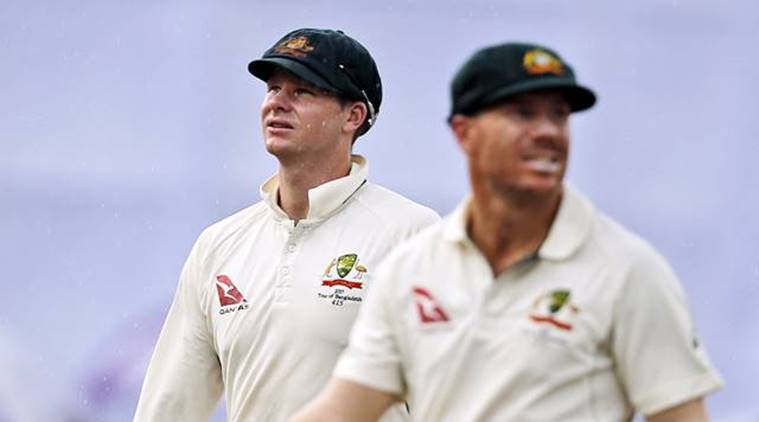
Steve Smith and David Warner

Steve Smith and David Warner, captain and vice-captain of the Australian cricket team, have been suspended for one year for their role in the scandal of the match against South Africa in Cape Town. Smith acknowledged that during the same cheated, using a tape to scrape the ball and change its trajectory, after television cameras were caught his teammate Cameron Bancroft, also sanctioned with nine months. The three players have already been sent home from the concentration in South African lands.

All three may participate in club competitions, but not in international tournaments with their selection during the duration of their sanctions. The premeditated trap they used against South Africa has shaken the world of cricket not only in Australia.

"David Warner will not occupy relevant positions in the future," said the Australian cricket team. While Smith and Bancroft must wait two years to do it again, and "even then it will depend on acceptance by the fans," he added. In addition, each of them must complete one hundred hours of community services before being eligible again.

Also Read: The Scandalous Trap That Has Deeply Disappointed Australia

Smith and Bancroft have been found guilty of knowing the cheating plan, but according to the Australian Federation's investigations, Warner would have been the instigator.

"The Federation understands the anger of the fans and the Australian community about these events as they go against the integrity and reputation of Australian cricket and sport and the sanctions must reflect that," said David Peever, president of the association.

"They are significant penalties for professional players and this body has not imposed them lightly. We hope that after the suspension period players will be able to play the sport they love again and rebuild their careers" he said.
Australia captain Steve Smith

Australian squad captain Steve Smith, vice-president David Warner and player Cameron Bancroft, have been sent home from South Africa as a result of their involvement in the team's attempt to cheat on Saturday, during a test game against South Africa Series, the most prestigious game formula for sport. So they will not play in the next match between the two national teams - the tournament is made of different matches - which will start on Friday in Johannesburg. Smith will be replaced by the player Tim Paine in the role of captain.

In short, the scandal in which the three players are involved concerned the attempt to secretly tamper the ball with which they were disputing the game against South Africa. This attempted tampering was taken by the cameras and that's why the managers had to admit it.

For now, Smith, Warner and Bancroft have not been suspended or driven out by the national cricket team, but it is not excluded that in the next there may be serious repercussions on their career for this scandal. Australia coach, Darren Lehmann, who according to Cricket Australia CEO James Sutherland had nothing to do with trying to cheat, will not leave his place.
The press conference of Pakistan Super League 2018 (PSL 3) artist was held yesterday at the Dubai International Cricket Stadium. The backdrop for the opening ceremony of the third edition of the PSL took place where the artists who performed at the event talked about their performances that are expected to electrify the crowd at the stadium tomorrow.

The starry cast for the ceremony includes some world-class artists who have left their mark with their stimulating and memorable songs that have touched the hearts and minds of millions of fans. Following tradition, the opening ceremony of the third season should dazzle audiences in the stadium and the millions who watch on their television screens and in our LIVE broadcast around the world.

The ceremony is a wonderful reflection of the culture and heritage of Pakistan marvellously amalgamated with modernity, an internationally renowned artist as Jason Derulo will act this year following in the footsteps of Sean Paul and Shaggy who left their mark on the first two editions of the Pakistan Super League.


The artists who spoke at the press conference included Abida Parveen, Ali Zafar, Shehzad Roy, Sachal Orchestra, Emcees, Bilal Ashraf and Hareem Farooq. In addition to the wonderful line-up of performances, the opening ceremony of the Pakistan Super League would include some other fascinating acts and attractions that will enthral the fans for the third year in a row.

The ceremony begins at 7pm UAE time, the ceremony will be followed by the first match of the tournament between defending champions Peshawar Zalmi and newcomers Multan Sultans, the match will start at 9:00 p.m.
The new ODI rules by the International Cricket Council are adversely affecting bowlers, and the ongoing India-Australia series is the best example of it. Where the environment has been improving for batsmen, the cricket is getting more and more difficult for bowlers. And the organisation responsible for it is the one which is handling the game.

Both teams have been able to play only four of the six games as two ODI were abandoned because of rain. A total of 2565 runs were scored in these four matches, excluding the 295 runs scored in one of the abandoned matches. India have defeated Australia in two such matches where they were chasing a target of more than 350 runs.

The ICC has recently decided to allow two separate balls for both ends in one-dayers. This decision has come as a hard blow for the ‘reverse swing’ because if the opponents play the maximum 50 overs, even then it is quite difficult to obtain reverse swing with a 25-overs-old ball.

And as if it were not enough, the ICC has taken another measure to strengthen batsmen, that is, it has reduced the number of players to four from five outside the 30-yard circle. That’s why in the case of batting wicket, batsmen can endanger bowlers’ career.

The ongoing India-Australia series is also being played in the condition favourable to batsmen. In the first match Australia set a target of 305 runs, and restricted India to 232 to clinch a 72-run victory.

Then in the second ODI in Jaipur, Australia amassed a Himalayan total of 359 runs, but India chased it in the 44th over, with a loss of just one wicket.

The third ODI was another high-scorer where Australia chased a 304-run target, winning the match by six wickets. Rain washed away the fourth and fifth matches. The Aussies scored 298-8 in the first innings, but the second innings could not be completed due to rain. The fifth ODI was abandoned without a ball being bowled.

Then the historic Nagpur mach was held where only 10 wickets were lost and a whopping 701 runs were scored. India chased a target of 351 and so the match was another nightmare for bowlers.

The statistics were staggering if taken as individually, too. The least average of the four top-scorers is 56, whereas the lowest strike rate among them is of 95.91. Australia captain George Bailey has scored 474 runs in the series with an amazing average of 118.50 and almost the same strike rate. Kohli has gathered 344 runs at 172 and with a strike of above 124. Rohit Sharma, 282 runs at 94 and strike rate of 95 and Shikhar Dhawan, 224 runs at 56 with a strike rate of 101.

The result of these batting heroics is obvious: a blow to bowlers. The top three wicket takers are Mitchell Johnson, Vinay Kumar and Ravichandran Ashwin, who have collected 7 wickets each with averages of 33.42, 34.71 and 40.57 and economy rates of 5.68, 7.04 and 6.17, respectively.

Ironically, the batsmen who are making the most of the new ICC rules are crying because of their team’s bowlers. India captain MS Dhoni and vice captain Virat Kohli have objected to these changes. Dhoni has even cited some bowlers saying they felt they should be replaced by bowling machines.

Though the last match of the series is yet to be played, the ICC should reconsider the rules.

Even the batsmen who are making hay are criticising the new rules due to their teammates' bowlers (Photo: BCCI)

I still remember that in a side match during the South Africa’s tour of Pakistan in 1997-98, a not-so-famous youngster Ali Naqvi was given a chance to play in the captaincy of Amir Sohail.

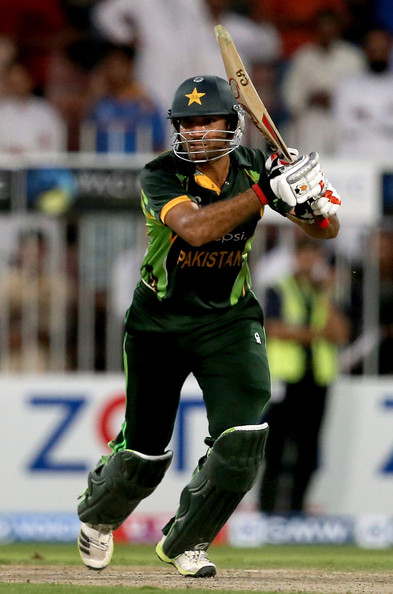
Ahmed Shehzad
Naqvi made the most of the chance by scoring a century in the second innings. His hundred earned him a chance to play a Test against the Proteas.

Luck continued to smile on him in Rawalpindi stadium where he played a triple-figure innings in his debut against the bowlers like Alan Donald, Shaun Pollock, Jacques Kallis, Brett Schultz and Pat Symcox.

In the past when the national team needed a batsman to open with Saeed Anwar, the Pakistan Cricket Board arranged a side match for it. Ali Naqvi and Mohammad Ramzan were trialed in that match.

Now, after 16 years, the history is repeating itself as the Ahmed Shahzad and Shan Masood will try to perform in the side match against South Africa to earn a place in the Test squad.

Shehzad is undoubtedly talented. Masood too performed well at the domestic level which gave him the opportunity to tour Zimbabwe. Both are skilled. And this very equality has become a double-edged sword for them as they have to deliver in the three-day practice match to get a place in the final squad.

Pakistan A team captain Umar Amin has decided to field first in the side match. Both openers might have only single innings to prove themselves for the selection. It would not be easy for them to play under pressure against the team like South Africa. And whoever of them will get a chance he must be prepared for more pressure in the five-day match, without the support of a senior opener.

Shehzad or Masoood, whoever succeeds in performing well in the debut will be playing in the next series. Otherwise their future will be in doubt because if they failed to perform, Tufeeq Umar, Imran Farhat, Nasir Jamshed or Mohammad Hafeez will be recalled against Sri Lanka.

Though it’s a good decision by the selection committee to try young openers, but the timing is not good. The right time for trials was the tour of Zimbabwe when newcomers could be tested in place of Hafeez Even in Lahore’s three-day match selectors could have taken the trial for three positions but they missed that chance too.

If it was decided to exclude Hafeez then it would be much better to announce the squad before the practice match. It is wrong to think that Zulfiqar Babar was selected due to his performance. Even if he did not claim six wickets in the match, he had to be selected as a left-spinner who was struggling to get a place in Test after proving himself in ODIs and T20s.

So, Masood and Shehzad must be assured before the match that they would be included in the final 15-man squad. By doing that both guys had a chance to play in comfortable conditions and whoever delivered will be playing in Sharjah for three-day match much comfortably.

But now, both openers are not sure whether they would play in Tests against South Africa. And interestingly, if both performed well then they had to wait for their luck. And if Shehzad and Masood failed to play well in the side match then will the team management give them a chance to play or give chance to Umar Amin and Ali once again?
After spending a memorable season of 2011, Mohammad Hafeez is now on the verge of failure. Facts indicate that professor has miserably failed in Tests after becoming the T20 captain.


Hafeez took over the T20 captaincy when Pakistan were touring Sri Lanka. He played his career best 196-run Test innings. He also scored a half century. However, the next six Test innings were a nightmare for him and Pakistan cricket fans. He could not play double-digit innings in next six turns and in the remaining eight innings, he hardly scored 22 runs.

His T20 performance after becoming captain is pretty much impressive. He played 18 T20s as captain scored 541 runs at an average of 31.82 and also took 17 wickets. However, he played eight Tests during that period, scored 417 runs at an average of 26.06, and could only take eight wickets. In 2013, He played five Tests with an average of just 10.20; he only scored 102 runs and his highest score was 22 against Zimbabwe in recent Test series.

Hafeez’s Test performance after becoming T20 captain:

MatchesRunsBestBatting Avg100sWicketsBowling Avg
841719626.061829.37

When we look at ODI performance compared to Tests, it looks good. He played 30 ODIs since June 2012 and scored 894 runs with an average of 33.11 including two centuries and 24 wickets

Hafeez’s ODI Performance after becoming T20 captain:

MatchesRunsBestBatting Avg100sWicketsBowling Avg
30894136*33.1122436.95

These facts indicate that he is not going through a 'bad patch' as he is not in form in Tests only. This shows his negligence towards Test cricket. Why is a cricketer with decent form in ODIs and T20s failing in Tests? Only Hafeez can answer this question.

Hafeez T20 performance as captain

MatchesRunsBestBatting Avg100sWicketsBowling Avg
185418631.8201718.35

It is about time that some critical decisions should be made. We should include players who have capacity to give a good start and play a longer innings rather than stars who fail to perform every time.
India are obsessed with keeping their hold tight over the international cricket. Therefore, they can't stand those who try to create obstacles in this regard. When Haroon Lorgat was head of the ICC, he tried to control India and now Haroon Lorgat has become Chief Executive of Cricket South Africa after completing his tenure at the ICC. Since then the cricket relations between India and South Africa are sour.

India were handcuffed when Logart was the head of the ICC, but now India want to set some old scores. India are supposed to have a long tour of South Africa to play three Tests, seven ODIs, and two T20s. However, India have shown reservations over the issued schedule, in fact, it looks like that India might refuse to tour South Africa this year.

In order to strengthen its position, India are trying to use Asian teams to hold a tri-nation series in November and December during the time slot allocated for South African tour. This tri-series will include India, Pakistan, and Sri Lanka.

Heads of all three Asian teams are in Chennai to attend Asian Cricket Council's meeting where the issue is likely to be raised on Saturday. In December, Pakistan are already scheduled to play a complete series with Sri Lanka in the UAE including three Tests, five ODIs, and two T20s. Now if Pakistan agree to Indian plans, they have to withdraw the bilateral series in the UAE with Sri Lanka. However, that will be a stronger blow to South Africa.

The sudden approval of visas for Faisalabad Wolves to take part in the Champions League T20 can be part of India’s lesson to South Africa. Until the visa issuance, it was clear that India would refuse Faisalabad Wolves' participation in the CLT20 citing security reasons. However, abrupt visa clearance for team Faisalabad and news regarding a tri-nation series is somehow evident that something must be going wrong.
Pakistan whitewashed then world number one England in a Test series earlier in 2012 and it seemed that now Pakistan were on the right track. It was a good sign too that a few months before that victory Pakistan were under the burden of spot-fixing scandal and then suddenly the same team outshone the world's top team. This scandal was a blessing in disguise as Pakistan did not lose a single Test series after that until a foreign coach Dav Whatmore came and since then Pakistan have not won a single Test series.

[caption id="" align="alignright" width="225"]Dave Whatmore, Pakistan, Test, Series Why the winners of seven straight Test series started losing one series after the other (Photo: AFP)[/caption]

There has not been much changes to the team that 'greenwashed' team England. The same Misbahul Haq was the captain; the same Mohammad Hafeez was the vice captain, the same Azhar Ali, Asad Shafiq, the same Saeed Ajmal, Junaid Khan, and Abdur Rehman. If there has been a change it is coach. Mohsin Khan was the head coach back then. However, even after the historic success, Moshin was sacked and Australian Dav Whatmore was appointed as the new coach.

As coach first major assignment of Dav Whatmore was the tour of Sri Lanka where Pakistan had chance to become world number two in case of victory. It was not such a difficult task. In addition, with a high morale of the team and after beating world number one, dealing with Sri Lanka in Sri Lanka was not a bit easier. However, Whatmore failed to utilise the players and Pakistan lost the series 1-0. After that, earlier this year Pakistan had to face South Africa that ended up as a nightmare of 3-0 defeat including the lowest innings total in the history of team Pakistan: a mere 49 runs.

Now with Zimbabwe series there was chance that Pakistan will get back on right track but the way Pakistan remained on the backfoot for three days in first test was a sign of disaster. And the icing on this cake of embarrassment was defeat in the second Test at the hands of a team that does not even belong to world rankings. Eventually, Pakistan slipped to number six in world rankings from four.

In short, since Whatmore became Pakistan's coach in March 2012, the team has won only one Test in eight. And it did not win a single Test series.

When Dav Whatmore joined, there were chances that Pakistan could capitalise the momentum and jump to top rankings from number five. However, Pakistan failed in first expedition against Sri Lanka and kept falling after that. Winners of straight seven Test series started losing after Whatmore's inclusion, and then continued losing. Why?

Today Pakistan cricket is at new lows and now this is a valid question that what fruit has a heavily paid coach brought to the team? Whatmore has to answer the question otherwise the upcoming Test series against Zimbabwe and Sri Lanka could be last for him.
Pakistan scored 249 all out in the first innings of the first Test against Zimbabwe. Out of this, Saeed Ajmal scored 49 runs and Azhar Ali and Misbah-ul-Haq jointly scored 131. That means rest of the eight players including four specialist batsmen and one wicket-keeper scored just 69 runs in aggregate. Apart from Azhar and Misbah, the remaining four specialist batsmen scored a total of 23 runs - or  5.75 runs each. This is the tale of Pakistan’s first innings against Zimbabwe.

After watching the first innings at Harare, I have no choice but to accept my mistake that I had wrongly envisaged the tour as one-sided. I had expected this to be a charmless and boring tour and thought that Pakistan could easily whitewash in all three formats. I thought that fans' interest in the series would be restricted to knowing the victory margin of Pakistan, for there would be now a question of their defeat against the minnows Zimbabwe. The expert would call it a good preparation opportunity before matches against Sri Lanka and South Africa.

Pakistan Batsmen
But Pakistan has made even this tour interesting, for they have the inbuilt ability to make any match of any format against any team exciting.

Earlier this year Pakistani spectators had the same excitement during ODIs against South Africa as they had against Zimbabwe in the one-day series. Pakistan had a thrilling series against the top team where the last match was the decider and now Pakistan have made ODI series interesting again a team like Zimbabwe.

During T20s Pakistani bowlers were struggling to take wickets but this can be neglected on the pretext of shorter format of the game and on the back of the expectations that Pakistan would outclass Zimbabwe in ODIs. But Pakistan was themselves outclassed in the first ODI.

Somehow, Pakistan won the one-day series and then it was hoped that Zimbabwe would be a piece of cake for Pakistan in the Tests. But on the first day of the match, Pakistan found that the cake was quite difficult to swallow. Pakistani batsmen faced an average bowling attack on a sunny day and on a flat track as if they were facing English pacers on a cloudy day at Lord's on a seaming wicket.

I fail to understand that why a good performer of one format fails in the second one. Ahmed Shehzad plays amazingly in T20s but as soon as ODI starts his abilities seem to fade away, and he starts playing selfish and negative cricket to secure his place in the team.

Mohammad Hafeez gets man-of-the-series-award in ODIs but as soon as the "professor" wears white kit, he lost his footwork. It looks like centuries against Ireland and Zimbabwe in ODIs have not helped Hafeez to improve his Test batting as if he seems not to have learnt anything from his failure against South Africa early this year.

After scoring his career-best 196 against Sri Lanka last year, Hafeez has only scored one century in the next 10 innings. He scored 143 runs in these 10 innings at 14.30. In 2013, Hafeez has only scored 48 runs in 7 innings with an average of 6.85. Even after such poor performance, no one dares to drop the professor from Test side.

Khurram Manzoor, who scored 77 runs against Australia in 2010, has been given another chance after 3 years. However, his batting shows that he is not in the mood for availing the chance.

The most senior and accomplished batsman in the side Younis Khan also failed against Zimbabwe and only scored 3 runs. If he continues with the performance, it will be difficult for him to remain in Test side in the near future.

A score of 27-3 was evident of Pakistan batting line-up failure. But then Azhar Ali, who has made his International comeback after six months, helped the man of crisis Misbah and anchored a partnership of 93 runs. But after Misbah’s departure, Asad Shafiq did not last long. Pakistan lost their eight wickets at 182, including Azhar Ali’s wicket. At that stage, Saeed Ajmal and Junaid Khan scored a partnership of 67 to help Pakistan cross 200-run mark.

Pakistan are repeating the same performance as they did against the excellent South African pacers. It is evident that because of playing more shorter format games Pakistani players are losing the ability to judge the ball and doing justice to it. As a result, they are facing problems in Test cricket.

Pakistani batsmen turned out to be merely quarter-to-6-run players against Zimbabwe on the first. Either Pakistani batsmen are incapable to do more or their temperament does not allow them to play longer game.

I am sure at least one batsman will stabilise himself and play a bigger innings in second innings. Moreover, I am sure that Pakistan will win this series very easily and the entire shortcomings will be covered with the same ease. But when will these quarter-to-6-run batsmen start performing consistently?
In recently held T20 series between Pakistan and Zimbabwe, Ahmed Shehzad played the biggest innings in the first game. However, the confidence of debutant batsman Sohaib Maqsood was also worth watching. Just after getting off the mark on his sixth ball, the next one he sent to six over long-on. That shot was evident of his ambitions.

Though Sohaib played a brief innings of 26 runs, the way he played those 16 balls, hitting two sixes and one four, was enough to make spectators as well as experts fell for this lad from Multan. Some overzealous experts even started comparing him with legendary batsman Inzimam-ul-Haq.

The 26-year-old MBA degree holder is being raved about by cricket analysts, and they are declaring him a future star. But where were all these people when in domestic season he piled up runs after runs and needed media attention? These experts turned a blind eye to him, and some even rejected him categorically, saying he was not the "material" for international cricket.

Sohaib Maqsood

A few months earlier when Super8 T20 cup was held in Lahore, Multan's skipper Sohaib played captain's innings and also showed his bowling skills against Lahore Lions. At that time, I got the news that his strokes had impressed Dav Whatmore and T20 captain Mohammad Hafeez. However, Hafeez was a bit concerned about his fitness and planned to give him chance in the next season.

After the game between Lahore Lions and Multan tigers, I met the "professor" and asked him about this young batsman. Hafeez confirmed that Sohaib has a matchless talent and he can be a part of the team in coming tours.

After this brief conversation with Hafeez, I wrote on a social networking website that Sohaib was going to be a part of the national team in the next series. Sohaib performed remarkably in T20 format and Hafeez wanted him to be part of T20 team initially. Therefore, by saying next series I meant the next T20 series.

However, as soon as I wrote that, a representative of a foreign website sitting behind me at the Qaddafi Stadium, Lahore, press box quickly asked me that given the next series was the Champions Trophy,would the PCB's selection committee going to give Sohaib chance for such mega event. Finding my answer in the affirmative his response was like "I don't think so".

I wrote a review about Sohaib's performance in national T20 and referred him as a "tiger of Multan", for he is always hungry to score runs. In addition, this reference was quite right as Sohaib was scoring runs against every bowler and kept filling scorebooks. I wrote that Sohaib was among the top performers in the ongoing season but still his name was not in the shortlisted 30 players for the Champions Trophy. I was quite sure that could not be neglected for very long. This run-scoring Multani Tiger was inevitable to be part of the national team.

In National One Day Cup, Sohaib scored 475 runs in 6 innings with an impressive average of 95. His career best innings was against Karachi Dolphins when he scored 156 runs on 95 balls with the help of 13 fours and 10 sky-high sixes.

Sohaib made his first-class debut as offspinner 10 years ago, but initial failures confined him to grade two or district-level cricket. However, he was a new batsman when he made his comeback in the 2007-08 season; a batsman who must have spent many hours practising on the net.

In his second appearance in Quaid-e-Azam Trophy, he scored 123 runs while bating at number 6 against Karachi Whites. In that season, Sohaib Maqsood scored 537 runs with the average of 53.70 in 12 innings.

The 2012-13 season was a turning point for him as besides reaching the 1000-run mark he was also declared the best ODI batsman. This helped him get a chance for West Indies tour but fitness barred him the favour.

Pakistan has found a dependable batsman in Sohaib who has a wide range of strokes. He can adjust himself to any format and his average of more than 43 in first class and around 51 in ODIs is a proof of that.

PCB should utilise his talent rather than wasting him in just T20s. This Multani batsman has the ability to play longer innings and losing such talent is certainly not affordable for Pakistan.

Read this in Urdu: https://www.cricnama.com/23785
Only one player in the Pakistani cricket team knows the art of hitting the headlines. Be it in the prime of his performance or teetering on the brink of nadir of his career or not included in the team at all, yet his words and actions are conducted in the full glare of publicity. So you got it. It’s Shahid Afridi!

[caption id="attachment_2189" align="alignright" width="300"]Will the meeting help Afridi move up the promotion ladder in the team? (Photo: AP) Will the meeting help Afridi move up the promotion ladder in the team? (Photo: AP)[/caption]

His fame across Pakistan is known to all and sundry, and this is why the matters regarding his presence and absence from the side succeed in penetrating the higher echelons of politicians. After the 2011 tour of the West Indies, he took retirement in protest after developing rifts with then coach Waqar Younis, and he was not called back in the team until the retirement of then PCB chairman Ijaz Butt. But Afridi remained in the news all the while and the episode also gave insights into his political influence.

Afridi recently met new governor of Punjab Chaudhry Sarwar. According to sources privy to the development, Sarwar used to be Afridi’s host in England and the recent meeting is a link in the chain.

The all-rounder has also been close to Governor Sindh Ishratul Ibad, who used his political stature to bring Afridi in the national team or even make him captain of the side. Butt also disclosed Ibad’s support for Afridi.

From one governor to another, is Afridi vying to move up his career ladder? Are some circles, unhappy with Mohammad Hafeez as T20 captain, ready to welcome Afridi? Answers to these questions will come shortly.

Sarwar has close association with the country’s prime minister, Mian Mohammad Nawaz Sharif, on whose request he returned to Pakistan, leaving his British nationality.
Ever since the investigations started into match-fixing allegations in the Indian Premier League, many startling revelations have come to light. Every time there comes a development, it does not come without a new and shocking aspect.

[caption id="attachment_2026" align="alignright" width="300"]Raina and Dilhsan under the match fixing radar again and ICC is still silent The past of Raina and Dilshan is evident of the fact that the two of the three players named in the charge sheet are them. (Photo: AP)[/caption]

From the suspension of BCCI head Srinivasan to the resignation of IPL chairman Rajiv Shukla; from the involvement of Test cricketer Seesanth to the arrest of Chennai Super Kings owner Gurunath Meiyappan -- every aspect was astonishing. And now when the issue is under hearing in court, the charge sheet presented by Delhi Police has created a new mayhem.

According to it, a match-fixer Sunil Bhatia has confessed that during India’s tour of Sri Lanka a cheerleader helped him meet a Sri Lankan player and later on two Indian cricketers, and the cheerleader was the friend of the three. Bhatia said the three players are sill representing their teams.

Now it is being speculated who could possibly the three players who are still part of their teams. You might still remember that during 2010 Asia Cup in Sri Lanka, a news caused quite an uproar that key actors behind fixing had been traced, and name of an Indian player was also in news. Remember? Suresh Raina! However, not only the Board of Control for Cricket in India, but the ICC itself and its Anti-Corruption and Security Unit have turned a blind eye to it and took no action.

According to the news, Raina was seen in a nightclub with a woman who was said to be in connection with fixers. Almost the same matter which was linked with Indian captain MS Dhoni that his wife was spotted with an Indian film star several time who was later arrested in fixing scandal and also came up with startling revelations.

Moreover, news about Sri Lankan opener, Tillakaratne Dilshan, were also doing the rounds that he had contacts with bookies. Initially, the ICC took a few steps in the case, but the news seemed to fade away with the passage of time.

Now considering the charge sheet of Delhi police it can be speculated that these Sri Lankan and India players cannot be other than Dilshan and Raina because of their notorious past. As for the third name, it will also be out soon.

The BCCI managed to put nuisance of Indian cricketers under the rug because of its muscle of authority in the ICC. On the other hand, countries like Pakistan, with no or less authority, cannot help its players and eventually they end up behind the bards in the UK. However, the Pakistan Cricket Board's strategy seems more appropriate because it helps make an example of the corrupt players. On the contrary, the attitude of Indian Board looks like pat on the back of their cricketers. Anyhow, let us see what time and karma have to decide with these charge sheet revelations.
Whenever Pakistan lose any series, people start crying for the return of Mohammad Amir. He is considered as the saviour of the team as he played a key role in Pakistan’s last major win in the 2009 World T20. But is it a right attitude to want a player back in the team who has himself confessed to spot-fixing? And that too when we have an alternative in the form of Junaid Khan.

[caption id="attachment_1936" align="alignright" width="210"]Yearning for Mohammad Amir in the presence of Junaid Khan doesn’t seem right (Photo: AFP) Yearning for Mohammad Amir in the presence of Junaid Khan doesn’t seem right (Photo: AFP)[/caption]

It seems our minds are still slaves despite independence. It’s justifiable to be proud of the past, but the future should not be taken for granted. This reflects the fall of nations. And Pakistan cricket is no different. Moreover, Pakistan Cricket Board acting chairman Najam Sethi has also said he would demand the International Cricket Council for Amir’s return.

It seems there was only one bowler in Pakistan's history, who is Mohammad Amir, and the team would not lose a match if he is in the side. But the reality is that Amir does not have a magic wand which he waves to make Pakistan win mysteriously.

If we look at the present Pakistani team, Junaid Khan is the best alternative of Amir from every aspect. A little comparison would help.

In Test cricket, Amir has played 14 matches whereas Junaid has played 9. Amir has taken 51 wickets at an average of 29.09. His innings best is 6 wickets for 84 and match best is 106 runs for 7 wickets. On the other hand, Junaid took 29 wickets at 28.17. His innings best is 38 for 5 and match best is 115 for 6.

For a better and equal comparison, we take Amir’s first 9 Tests. Amir bowled 291 overs in his initial 9 matches, claiming 25 wickets, including a five-wicket haul. You have seen that as compared to Amir’s figures, Junaid has taken more wickets, with better average and with more five-wicket hauls.

In One Day International cricket, Junaid Khan has played 30 ODIs and AMir has played 15. Amir has taken 25 wickets at an average of 24. His best performance is 28 runs for 4 wickets. In comparison, Junaid has played taken 47 wickets at 24.40. His best figures are 12 for 4. In his first 15 matches, Junaid gave 550 runs, taking 24 wickets. His best, 12 for 4, is included in his initial 15 matches.

As for Twenty20, Amir has represented Pakistan in 18 matches and Junaid did so in 4. Junaid gave 102 runs and took 3 wickets, whereas Amir took 23 wickets at 19.86. Amir has taken 3 wickets in his first 4 matches. So there’s not much difference here, too.

[caption id="attachment_1937" align="alignright" width="300"]Comparison shows performances of Mohammad Amir and Junaid Khan are the same in all formats of the game (PA Photos) Comparison shows performances of Mohammad Amir and Junaid Khan are the same in all formats of the game (PA Photos)[/caption]

There no denying that Amir is a talented player, but to present a convict of spot-fixing as the messiah for the team is in no way justifiable. Especially, when the team has equally talented bowler like Junaid Khan.

And if talent is the only thing then Mohammad Asif was a much better bowler than Mohammad Amir, so why Najam Sethi is not trying to bring Asif back? So the PCB should take concrete steps to find bowlers for the future instead of relying completely on the older ones.

Even if Amir comes back in the team in future, he will do so at the cost of another talented bowler. But the more disappointing thing he is likely to face is that if he fails to perform, people will think he is subject to wrongdoings once again. The spot-fixing episode will keep coming back to haunt him for ever. Pakistan need to prepare another fast bowler for the 2015 World Cup who, along with Junaid Khan, will stun the opponents on the bowling friendly wickets of Australia and New Zealand.
English soil and no controversy? Impossible. As fans are trying to forget Ian Bell’s runout case, Stuart Broad’s disputed notout today in Trent Bridge has added a new chapter in the history of controversies.

[caption id="attachment_1846" align="alignright" width="300"]The controversial moment (Photo: PA Photos) The controversial moment (Photo: PA Photos)[/caption]

In the first Test between the archrivals, the hosts have firmed their grip, thanks to a seventh-wicket partnership between Broad and Bell. But when the score was 297 and England were leading by 232, an Ashton Agar’s delivery nibbled away Braod’s bat, going straight to wicket-keeper Brad Haddin, touching his pad and then into the hands of Michael Clarke in the first slip. As Australia started celebrating the end of a key partnership, Aleem Dar remained unmoved. Broad was not out despite being out. The tourists had already used their two reviews, so they lost a crucial wicket.

It was quite clear from the replay that the ball touched the bat. Now fingers started pointing at Broad that why he should not have left the crease. Commentator Michael Holding went so far that he said Broad did what had been done by West Indies wicket-keeper Dinesh Ramdin in the 2013 Champions Trophy, means an act against the game’s spirit. Pakistan captain Misbah-ul-Haq lost his wicket after Ramdin pretending taking a catch, but the ball had actually touched the ground. The ICC slapped a two-match ban on Ramdin after that.

So Broad’s notout helped England reach 326 for six after three days. The partnership between the two now stands at 108, with Bell at 95 and Broad at 47. On the other hand, Australia, whose bowlers were performing as well as they did in the first innings, returned with a heavy heart.

Overall, the third day at Trent Bridge proved lucky for the hosts. Bell was saved by the UDRS when he was declared lbw by umpire Kumar Dharmasena on 34. Ironically, the same UDRS also saved Broad because Australia were left with no reviews.

The expressions of anger on Australian players looked quite strange. The same who are (in)famous for not moving an inch until the umpire’s decision are now sermonising for the “spirit of the game”.  Set aside Ricky Ponting, the present captain Michael Clarke is no angel, too. In the 2008 series against India, he was out on Anil Kumble’s ball, but a wrong decision by the umpire rescued him. He repeated the same in 2012 Ashes. So protesting on such an issue does not suit them.

Then came Shane Warne, posting tweets against Aleem Dar, including this one: "We all make mistakes & it's a very tough job being an umpire, but when Dar continually makes crucial mistakes why does he keep getting a gig."

Mr Warne, talk some sense. Please.
Professional sports are run seriously elsewhere in the world but in Pakistan they are taken for granted and anybody who has spare time is welcome to try his hand in the business. Cricket in the country has become a surprise for quite a while and has experienced things so funny that nobody could have ever imagined. The national team’s victories and defeats both are unpredictable and the surprises within the Pakistan Cricket Board (PCB) are mind-boggling. As fans were still reeling from the shock of team’s performance in the Champions Trophy, they got another surprise after the tournament when renowned journalist Najam Sethi was made PCB’s acting chairman just a month after his stint as Punjab’s caretaker chief minister.

It is yet to be decided as to what was the bigger surprise – Zaka Ashraf electing himself as the board’s chairman for a four-year term or Sethi’s appointment for the post. However, the appointment of Sethi is as illegal as was the election of Ashraf because the Islamabad High Court (IHC) did suspend the former chairman but not the board’s constitution. Under the constitution, the members of governing body can nominate any of their member as chairman within 45 days. But the government named Sethi as the board’s supremo who boarded to London to participate in ICC’s annual meeting. Sethi's appointment has been challenged in a court and the Transparency International has also warned of the illegal appointment. But on the other hand, ‘Aapas ki Baat’ host is releasing strict orders with smiling face and warning PCB officials that his unnamed source, which he often refers to as ‘chiriya’ (sparrow), is informing him of every development.

There are observers who believe that the aura of confidence Sethi had while taking the charge as PCB chairman was never witnessed before. Sethi has the powerful hands of present government on his back, which helped him acquire the top-notch position. Links with eminent politicians and experience of chief ministry have their importance, but in the PCB – where even big guns found it difficult to survive – Sethi’s ‘chiriya’ will not take long to take a final flight.

Najam Sethi

Addressing a press conference as PCB's acting chairman, Sethi said he was not there to play a long innings and that he would quit when his short innings would be over. If he wanted to make his innings short, he needed to make some big hits, but now it seems that the acting chairman needs to safeguard his wicket because a yorker in the form of court’s decision can break his wickets. Sethi’s appointment is not the first instance of government’s intervention in the PCB. Past governments also showed favouritism by appointing their dear ones at the top. But the appointment in question by the government that has been making decisions in haste and with perplexity is going to cost him soon.

The ICC had given the deadline of June 30 to all its member boards to install democratic setup free of government’s interference. Keeping this in view, Zaka Ashraf managed to elect himself as the board’s ‘constitutional’ chairman just two days before the general election which was challenged in the court. The incoming government showed sheer idiocy to appoint Sethi as PCB’s acting chief because the board’s current setup is neither democratic nor constitutional. That is why Pakistan will likely to face suspension from the ICC as soon as July starts, and unfortunately, nobody is considering this aspect. The ICC is also now aware of the Sethi episode after Transparency International raised the issue. Let’s see how the anchorman convinces the council in this regard because cricket in Pakistan would go further down if the country’s membership was suspended. So Sethi – who entered the ground to ‘enjoy’ a short innings – now faces a monumental task ahead about which he was unaware of before taking the charge.

Critics say that Sethi’s chiriya will fly shortly from Gaddafi Stadium because of the unconstitutional appointment. The journalist also does not want to see his chiriya caged in the stadium which provided him with the news from the echelons of power. Sethi actually wanted to leave the PCB headquarters after a brief period just as he ‘served’ briefly as Punjab’s chief minister, but now he has to perform his duties seriously as the board’s acting chief because it is not out of question that the government gives his appointment a democratic colour after which Sethi – who has been planning to play a T20 – would have to play a Test match.
"It’s just a game, it’s just a sport why taking it too serious and being so poignant." These were my words. And I was trying to pacify my friends who were being unable to control their emotions after recent Pakistan-India encounter.  The reply was, “You think about it and ask yourself ‘Do I actually mean what I am saying?’”. Challenge was accepted and I started thinking about it from the beginning and found they were right. Normally, a cricket match starts on the day when it is scheduled to be held but for me the match in question started months ago. The first task was to assign the duty of buying tickets to a friend as soon as the sale was open. That idea was a success and we managed to bag tickets for all the willing friends. And when I use the word ‘success’ I mean it, because all the tickets were sold out in nearly 27 minutes.

[caption id="attachment_1712" align="alignright" width="300"]The ticket to watch world war of cricket (Photo: Rai Azlan) The ticket to watch the world war of cricket (Photo: Rai Azlan)[/caption]

Taking a break from the busy life of London and travelling all the way back to Newport, near Cardiff in Wales, joining the group of friends there to hit Edgbaston next morning. It was second success. Although the travel to Wales last Friday took me twice as much as it normally does in terms of both time and money.

The third success was to reach Edgbaston in time on the morning of last Saturday. The journey to Edgbaston ended in 90 minutes but the place was too crowded and the atmosphere gave the idea as if whole Birmingham were heading to Edgbaston cricket ground. We spent a hefty 45 minutes in finding a parking space and a vacant space was waiting for us nearly three miles away from the stadium.

The walk to stadium was another charm. Many new and short-term acquaintances were made, many self-proclaimed cricket experts and analysts were busy in showering their knowledge and analyses. Temporary stalls were set to sell the Tiranga and green flags, horns, fancy hats, and whatnot.

Standing outside the stadium during the anthem, we were waiting for our friend who had the tickets. Anthem time was the biggest attraction for me that day but we missed it – fortune does not smile on you all the time.

The crowd was keyed up, electrified, buoyant and enthusiastic. Representatives of many TV channels were humming around to get some bite, a Pashto TV channel (Khyber TV) tried their hand on our group, questions were asked in Pashto and answers were in Urdu with a slight flavour of Punjabi. We were in the queue when Pakistan lost the first wicket; we were still in the queue when Hafeez was hitting one boundary after the other.

We were finally sitting on our designated seats. Just 25 feet away from us Shikhar Dhawan were fielding at the third man position. But before reaching the seats we had to go through the security checks which was tighter than the normal games, cell phones were jammed, our placards, cans of cold drinks, and horns were confiscated, however, the parathas and biryani boxes were allowed, maybe because of their delicious aroma.

The match was between 22 in the ground but the 22000 around the playing field were consistently involved in every fall of wicket and every shot was cheered and booed equally. The fielders of team India on the boundary were also engaging the spectators. The chants of "gujjer gujjer" and” hero hero" made Dhawan to start twisting his moustache, and when clouds started pouring rain, he started giving gestures as if he was trying to tear clouds apart to get the sun rays back on ground.

[caption id="attachment_1713" align="alignright" width="300"]Emotional sloganeering ended with “yeh dosti hum nahi chorhain gey” (We’ll never give up this friendship) (Photo: Rai Azlan) Emotional sloganeering ended with “yeh dosti hum nahi chorhain gey” (We’ll never give up this friendship) (Photo: Rai Azlan)[/caption]

The kind of game team Pakistan presented was as bad as even a blind could see. That is why one friend declared the as match as ‘India vs Rain’ rather than ‘India vs Pakistan’ because it was rain that was testing nerves of the Indian players and the Indian fans the most. Those who were chanting slogans and yelling against each other were seen sharing umbrellas during the rain. However, that was near the playing field. Under the roof at the entrance, many gathered to take shelter from rain. In addition, the presence of ultra charged crowd representing the arch-rival cricketing nations instigated the exchange of words and slogans. The fan verbal fight heated up with every passing moment, however, it ended up with both sides holding hands and singing "yeh dosti hum nahi chorhain gey" (We’ll never give up this friendship). Chants of “Jiju Jiju” filled the air when Shoaib Mailk was playing; while Pakistani spectators raised these chants Indian fans were silent and tried to coin an answer to it.

When rain stopped the game after Dhawan’s dismissal, our group decided to leave as rain did not seem to stop, and even if it stopped there would not be any charm left in the match. When we were on our way back to the car parking, I realised that we were not alone. A majority of Pakistani spectators were on their way back homes, dejected and heartbroken.

I always wonder that why people start leaving the stadium when their favourite team is losing. That day I got the answer, at least this hypothesis is valid for Pak-India game. The reason is possibility of harsh exchange of words and fan fights especially when emotions are running so high that cricket does not remain a game any more.

That was my journey and a lifetime experience at Edgbaston. We lost the match but the moments I lived there are matchless and priceless, and I do not know if I will ever get to see the mother of all cricket games again.

So here, I put the full stop to the series of Pakistan vs India in the Champions Trophy. Though India won this time around but the past is a reality and Pakistan’s victory in 2004 and 2009 cannot be forgotten or changed. One bad day and one bad performance should not disturb the morale because Viv Richards said, “One day is not a whole season.”
Cricket isn’t cricket without Indo-Pak contests. On June 15, the two Asian giants are set to lock horns with each other in the Champions Trophy group stage match at Edgbaston, Birmingham. Fans of both countries are eagerly waiting for this match. Every cricket lover’s eye will be on their TV screen when the arch-rivals India and Pakistan confront with each other. Defeat for the fans of both countries is just unbearable. They just want their teams to win the match at any cost. During the contest between the two countries, every individual will be praying for their team’s success, forgetting all kinds of differences and yearning for their team’s victory.

If one goes by Champions Trophy’s history alone, the scale tied in the favour of Pakistan who have 2-0 lead over India. Pakistan are also leading in the total matches played between the two. Pakistan and India have played two matches in Champions Trophy and Pakistan have won both of them. Here, I’m discussing these two matches:

First ever Indo-Pak match at Champions Trophy
It was the fourth edition of the ICC Champions Trophy when Pakistan and India confronted each other for the first time in the event’s history. Pakistan won the low-scoring match by three wickets, thanks to Yousuf’s heroics. Indian top order collapsed horribly in front of Rana Naveed’s and Shoaib Akhtar’s catastrophic bowling. Half of the Indian team went back to the dressing room after 20 overs. India were 73 for 5. Then partnership of 82 runs between Dravid and Agarkar helped India to put exactly 200 on the board for all out.

Chasing a 201-run target, Pakistan’s top three batsmen were dismissed on 27. Then Inzamam and Yousuf batted responsibly and took the score to 102 for the loss of three wickets. Yousuf stayed at the crease till the end as Pakistan chased down the target in the last over. Yousuf remained unbeaten on 81.

Meanwhile, a scuffle between Shoaib Akhtar and Rahul Dravid made the fans more enthusiastic.

The Centurion Contest
That was the second confrontation between India and Pakistan in the Champions Trophy. Pakistan had won the toss and elected to bat. At 65, Pakistan’s top three batsmen were back to the pavilion. Then Muhammad Yousuf and Shoaib Malik took the charge and helped Pakistan recover their poise. The partnership between the duo was 206. Malik scored an unbeaten 128 while Yousuf scored 87. Pakistan put 302 runs on the board for the loss of nine wickets.

[caption id="attachment_1595" align="alignright" width="300"]Malik scored an unbeaten 128 in ICC Champions Trophy, 2009Malik scored an unbeaten 128 that help Pakistan to put 302 runs on the board in the Final of ICC Champions Trophy, 2009 (Picture © Getty Images)[/caption]

India received a big blow as they started their innings. Muhammad Aamir sent Sachin Tendulkar packing when the opponents’ total was just 23. However, Gautam Gambhir batted superbly after Sachin’s loss before he was run out by the direct hit of Younus Khan. That was the turning point of the match. India lost the match by 54 runs.

That was a little history of the Indo-Pak matches in the Champions Trophy. The matches between the two arch-rivals have always been spicy. Cricket usually doesn’t remain a gentleman sport when it comes to rivalry between the two. Nobody can forget the sledging between Afridi and Gambhir in an ODI. Similarly, nobody can forget Javed Miandad’s ‘frog-jump’ over the excessive appealing by Kiran More. And the row between Aamir Sohail and Venkatesh Prasad in the 1996 World Cup quarter-final match at Bangalore is also unforgettable.

Pakistan and India have played five ODIs in June. India have won three as compared to Pakistan’s two. Their upcoming match in the Champions Trophy also falls in June. Let’s have a look at the history of June ODIs between the neighbouring countries.

Indo-Pak confrontation during Kargil War
The Kargil conflict took place between May and July, 1999, making the relations between the two countries strained. It was against this backdrop of tension that India and Pakistan had to play a match at Old Trafford Manchester in the 1999 World Cup. It was match that required nerves of steel. India won the toss and opted to bat. India set a mediocre target of 227 runs. Dravid was the top-scorer from India with 61 runs. Wasim Akram and Azhar Mehmood were the most successful bowlers from Pakistan, taking two wickets apiece.

Half of the Pakistani team went back to the dressing room on just 78. Inzamam-ul-Haq and Moin Khan provided Pakistan with a little strength. Moin Khan succumbed to Indian bowlers when he was on 34. Inzamam managed to lead Pakistan to 175 for seven before he was bowled out on 41. Pakistan lost by 47 runs as a result.

Asia Cup 2000
Pakistan and India were face-to-face in the fifth match of the Asia Cup. Pakistan were off to a flying start. Both openers gave Pakistan a good start of 74 runs. Pakistan lost three quick wickets for one run to become 75 for three. Responsible batting from Muhammad Yousuf and Moin Khan helped Pakistan to put a good total on the scoreboard. Yousuf remained unbeaten on 100, helping Pakistan set a target of 296 runs.

Pakistani bowlers bowled to the full, especially Razzaq who impressed the audience by his heroics. Ajay Jadeja was the only Indian batsman who could stand Pakistani bowling attack. Pakistan sealed a 44-run victory as India were all-out on 251.

Pakistan biggest defeat against India by most runs
It was the second match of the tri-nation series between Pakistan, India and Bangladesh. India had won the toss and elected to bat against Pakistan. Indian openers started off well, making a first-wicket partnership of 155 runs. Virender Sehwag (89) was the top scorer from India followed by Gambhir (61) and Yuvraj (55). India set a smashing target of 331 runs for Pakistan.

As we all know Pakistan have never been good chasers. They failed to chase the huge target. Pakistan’s middle-order collapsed badly. Only Shoaib Malik and Kamran Akmal showed some courage against Indian bowlers. Pakistan lost that match by a big margin of 140 runs. That was also the Pakistan’s biggest ODI defeat against India in terms of runs.

The Final of Kitply Cup
Pakistani cricketers pose after winning

The Final of 2008 Kitply Cup was played on June 14 at Shere Bangla National Stadium, Mirpur. That was the second confrontation between Pakistan and India in this tournament. Having won the first match against Pakistan, India had an edge over their opponents. The toss was won by Pakistan who decided to bat. Salman Butt and Younis Khan scored centuries for Pakistan and made a 205-run partnership. Pakistan gave India a hefty 316-run target.

Indian came quite close to the target but failed to finish it off. They were all out on 290. MS Dhoni (64) and Yuvraj Singh (56) were the top-scorers for India. Umar Gul was the most successful bowler from Pakistan and took four wickets. Younis Khan was given the man-of-the-match award due to his brilliant performance in the crunch game.

Asia Cup 2008
In the 2008 Asia Cup, both sides came face-to-face in a group match played in Karachi. The greens shirts’ captain Shoaib Malik scored an unbeaten 125 runs, playing a pivotal role in Pakistan’s 299-run total at the loss of four wickets.

India easily chased down the target in the 43rd over with the loss of only four wickets. Virender Sehwag smashed 119 off just 95, including 12 fours and five sixes, while Suresh Raina scored 84. Both scored 198 runs together.

The nail-biter in 2010 Asia Cup
It was a thrilling contest between the two sides. The match was decided on the second last ball. Pakistan came to bat after winning the toss. With the help of Salman Butt’s 74, Malik’s 39 and a quick-fire 51-run innings by Kamran Akmal, including two fours and three sixes, Pakistan managed to gather a total of 267. Parveen Kumar took three wickets for India.

[caption id="attachment_1587" align="alignright" width="300"]Clash of Kamran Akmal and Gautam Gambhir in 2010 Asia Cup The clash between Kamran and Gambhir made the match more energetic.[/caption]

India chased that target in the last over at the loss of seven wickets. Gautam Gambhir and MS Dhoni batted superbly. Suresh Raina paced the innings at the end and took India to a winning position. Three runs were needed on the last two balls. Harbhajan Singh hit a massive six on Mohammad Aamir’s delivery to register India’s win.

The clash between Kamran Akmal and Gautam Gambhir and then between Akhtar and Harbhajan made the match more energetic.

So that is the history of ODI matches between Pakistan and India played in June. Pakistan will have an edge over India in the upcoming Champions Trophy as they have never been beaten against the arch-rivals in the tournament. Also Pakistan had recently won an ODI series in India against India 2-1. The young players of both sides have to handle the pressure which will be a must in the highly charged game. No rivalry between ant two teams can be compared to that of between Pakistan and India. Fans on both sides of the border can bear defeat from any other team but not from each other.

In the past, fans have often gotten violent and there have been reports of burning effigies of cricketers and at times even attacking at their homes. I hope this will not be the case this time.
“I have never seen as many cut shots in a whole Test match as many I have seen in last couple of hours”, said MS Dhoni. The reason behind such a statement by Indian cricket team captain was the innings and partnership of Muhammad Yousuf and Shoaib Malik.

[caption id="attachment_1348" align="alignright" width="300"]Shoaib Malik’s128 runs proved decisive for the match (Photo: Getty Images) Shoaib Malik’s128 runs proved decisive for the match (Photo: Getty Images)[/caption]

Both men joined hands when team was about to demonstrate its signature middle-order collapse. The match started when captain of Pakistani cricket team won the toss and elected to bat. The leftover of the ICL came back and embraced by the PCB. Star of such leagues, Imran Nazir and Kamran Akmal, opened the innings and exploded the Indian opening bowling by scoring 28 runs in first four over at an average of seven an over. Imran Nazir contributed most in this total with this cracking backfoot drives and the high elbow straight drive that was by far best shot of that tournament. These shots imbued Nazir with confidence – so much that he became overconfident and played a devastating stroke causing ball going up like a rocket and caught by Harbhajan Singh like a balloon.

Captain came to the pitch and kept the momentum of score going. However, containing bowling of Nehra disturbed Akmal and he tried to play a cut shot with literally no footwork when the ball was declared as dead the bails were off the stumps followed by the inside edge from the bat. Former captain Shoaib Malik joined the skipper and for coming six over’s scorecard was almost dead. The commentator Sanjay Manjrekar mentioned that there was no boundary for last seven overs right when the sentence ended Younis Khan went on backfoot and played a cracking cut shot to add another boundary in the total. This long 12-run partnership was broken by RP Singh who attacked around the wicket from the corner of side crease. Khan tried to drive the ball but it kissed the outside edge of the bat and went straight to Dhoni’s gloves.

Yusuf was the next man in and that was the beginning of the 10th highest runs fourth wicket partnership of ODI history. Both Yousuf and Malik played strokes in all directions of the wicket and satisfied every bowler Dhoni introduced. The main feature of the partnership was sweeping number of cut shots played by the duo. Pakistan struggling at 65 with three wickets down were now at a stable position of 271. The 206-run partnership included 87 runs of Yousuf and 110 runs of Shoaib Malik.

On the last ball of 46th over Nehra bowled a deceiving slower delivery making Yousuf to go for cut shot too early and lost his wicket. Next two men, Shahid Afridi and Umar Akmal, only added four runs to the total where Akmal went back with a duck. At the end of 49th over Malik also handed over his wicket when he charged down the track but lifted a straight shot too high that Pathan’s hands were the only destination for it. Pakistan already touched the 300-mark by then.

In final over Pakistan only added one run to the total and lost wickets of Umar Gul and Mohammad Amir. Pakistan set 302 as the target for India and looking at the batting line of India it looked not too easily defendable total. Nehra was the highest wicket taker for India with four wickets.

Gautam Gambhir and Sachin Tendulkar opened Indian innings very carefully and played a sensible filed cricket for four overs. Nevertheless, on the first ball of the fifth over the youngest fast bowler in Pakistani side showed the ‘don’ of cricket what ‘dawn’ of a new star looked like. Tendulkar had no answer to Amir’s sharp out-cutter and gave his wicket away. The early breakthrough gave confidence to the bowling side.

[caption id="attachment_1349" align="alignright" width="300"]Mohammad Amir dismissed “Little Master” Sachin Tendulkar (Photo: Getty Images) Mohammad Amir dismissed “Little Master” Sachin Tendulkar (Photo: Getty Images)[/caption]

Rahul Dravid, ‘The Wall’, was the next man in. While Gambhir was looking in great touch with his aggressive strokes, Dravid supported him and the pair added 67 runs to the total. Dravid pushed the last ball of the 14th over towards mid-off where Younis Khan swooped on the ball and converted into a direct hit. Third umpire pressed the red button to direct Gambhir to go back to the pavilion. Gambhir was in very aggressive mood as he completed his half-century in just 35 balls with six fours and two sixes, and his dismissal brought the Pakistani fans back to the edge of the seats.

India were 90 for two when Virat Kohli came in. The run rate went down after that and India crossed the 100 runs mark by the end of fifteen overs. Dravid and Kohli tried to keep the wickets and score at a constant rate. The experienced Gul struggled hard against this pair and replaced by Shahid Afridi who was on cloud nine because of recent bowling form. Kohli came down to loft the ball high in the long off where Gul was waiting to take a dramatic catch. Dhoni was the next man in but his presence did not last long as a flipper by Afridi hit his pad and Umpire Simon Taufel raised his index finger.

When things were looking in Pakistan’s favour Suresh Raina joined Dravid for fifth-wicket partnership and the two did almost the same what team Pakistan did while defending fourth innings. Raina was exploding his batting skills and strokes to make ball reach boundary on every loose ball and Dravid was supporting him with his signature keep calm and carry on attitude. In the 32nd over Dravid completed his fifty and on the other end brutal attack of Raina continued with an average of one boundary an over. In the 33rd over Raina hit two consecutive fours followed by a huge six which made Shoaib Malik completely helpless. At this point captain Younus Khan put his trump card on the table – Saeed Ajmal. Raina was disturbed by two consecutive dot balls by Ajmal and there was no boundary in that over too out of his frustration he showed awful footwork to an almost Yorker-like quick delivery from Ajmal, the huge shout for the lbw was successful and the danger man was on his way back to the dressing room, dejected over the umpire’s decision.

The last recognised batsman in Indian playing eleven was Irfan Pathan, who came to rescue his team when Pakistan was looking like making a comeback. Younus Khan wanted to keep the pressure on so he gave ball to Amir placing an attacking fielding with a slip. The planning clicked as speed, angle, and swing combination of Amir was lethal for Pathan to survive he was taken in the slip by Misbah-ul-Haq.

On the other end, Dravid kept playing graceful shots to keep the run rate moving. But he was not supported well by Harbhajan Singh on the other side. The required run rate was exasperating enough to run Dravid out on a quick throw of Umar Gul. The dismissal of Dravid was literally the last nail in India’s coffin. India was now seven down at 238 whereas another 65 runs were needed on 48 balls.

RP Singh swung the bat to a slower one by the master of slower one Rana Naveed and Yousuf who is normally not very dependable as a fielder took a neat catch in the mid wicket. One ball later, the tall guy Ishant Sharma fell victim of a quick landing Yorker of Naveed that uprooted off stump and also disturbed middle and leg. At the end of the 44th over Pakistan were one wicket away from victory and a secure spot in the semi-final of the ICC Champions Trophy.

Saeed Ajmal started the 45th over against his counterpart Harbhajan Singh, first ball rolled on his pads, the second ball was missed by him completely while attempting to sweep. The third ball Ajmal bowled outside the off stump and Harbhajan took advantage of it scoring a boundary towards point. The fourth ball was the end of the story for India and successful conclusion for Pakistan. Under the influence of overconfidence, Singh attempted reverse sweep, Ajmal’s magic deceived him completely and ball ended up hugging the stumps, and Centurion Park saw Pakistan’s first victory against India at that venue.

September 26, 2009 marked as Pakistan’s second victory over the archrival in the ICC Champions Trophy, and strengthened the unbeaten streak of Pakistan. Shoaib Malik was declared as man of the match for his century though the victory indeed was the result of combined team effort and attacking captaincy of Younis Khan.

The journey of Pakistan vs India in ICC Champions Trophy is going to an end in 10 days; interestingly it will end at Edgbaston stadium where it started nine years ago. Now time will tell if Pakistan keep their upper hand intact or India manage to take revenge. One thing is sure that there is something magical about the clash of these neighbours that made game’s ticket sold out in 26 minutes and 48 seconds.
The skipper walked towards his bowling mark with heavy feet, atmosphere was tense; it was not the final of a cricket World Cup but nothing less than that. The ground was Centurion Park and the day was March 1st, 2003. Pakistan set the total of 272, a formidable target, but the counter attack of India worked so well that on the fifth ball of 46th over the distance between the Indian team and victory was just two runs. Waqar Younis crossed the umpire landed his feet on the crease and delivered the ball that was knocked by Dravid and in no time kissed the boundary line. India won by six wickets and literally ended Pakistan’s dream to get a spot in the next round of the grandest stage of cricket world.

[caption id="attachment_1244" align="alignright" width="300"]Shoaib Akhtar and Rahul Dravid locked horns many times during the match (Photo: Getty Images) Shoaib Akhtar and Rahul Dravid locked horns many times during the match (Photo: Getty Images)[/caption]

Probably the images of this match was on Pakistani players' mind entering the Edgbaston Stadium of Birmingham on September 19th, 2004. It was the 12th match of ICC Champions Trophy 2004. After the horrible and shattered dream of Centurion Park of South Africa, this was the first time the archrivals were taking on each other at a stage set by the ICC.

Pakistan won the toss and looking at the conditions favouring bowlers, the skipper Inzamam-ul-Haq decided to field. The decision proved right by the opening pacer Mohammad Sami who sent Sourav Ganguly back to the pavilion on the third ball of the match. Three overs later Rana Naveed got the wicket of VVS Laxman at a time when total was just nine. Virender Sehwag and Mohammad Kaif tried to push the runs a bit farther and when the score reached 28, a flick by Sehwag on a full-length ball of Naveed was caught by Shoaib Malik. This marked the entrance of the “Wall”, Rahul Dravid, in the ground. He came in and later on played the kind of innings he was famous for. Kaif helped Dravid to bring India out of the trouble and made partnership of 45 in 10 overs.

The batting duo were looking comfortable playing against the bowlers introduced so far, but the speedster Shoaib Akhtar proved a bad omen for them as he was on his best moments of fitness during that season.

In the 20th over, Shoaib Akhtar first took the wicket of Kaif and then just three deliveries later Yuvraj Singh was on his way back to the dressing room. Half of the Indian batting line-up was back to the benches when the total was still under three figures. Later on Rohan Gavaskar became the victim of Abdul Razzaq after scoring a snail-paced 12 runs.

Ajit Agarkar joined the wall at such difficult time and convincingly supported Rahul Dravid who desperately needed a partner like him. They kept adding runs, though slowly, to the total and on the fifth ball of the 42nd over, Dravid completed his fifty. The half-century came as a morale booster for both men in blue and every over after that started to feature at least two boundaries. The total reached 182 after 46 overs.

The master of slow ball Rana Naveed bowled first five balls of his over very tightly and as a result, the cool-as-cucumber Dravid donated his wicket to him as he was caught and bowled on the final delivery of the 47th over. The crack in wall affected Agarkar too and he got out eight balls later when he was just three runs short of his half century. Agarkar’s wicket was the fourth one for Rana Naveed. In the final over Shoaib Akhtar dusted his hands with the tail-enders and made India all out at just 200 runs by taking wickets of Irfan Pathan and Ashish Nehra.

In the reply, Pakistan had a similar horrible start as the opener Imran Farhat got out in the first over without scoring a single run. The next man in was Shoaib Malik who became the victim of Pathan just after he converted the total into double figures with a boundary. The skipper sensed the trouble and joined the young man Yasir Hameed. The batting pair kept ticking the scorecard but Pathan was out there with the aim of some real business. In the 11th over when the score was 27, Hameed fell prey to Pathan. The next man in was the Pakistani version of the “Wall” better known as Muhammad Yousuf (Yousuf Youhana then). Inzamam and Yousuf showed that why experience really matters, both of them played sensible cricket and countered almost every bowler Ganguly had in his arsenal for that match. Pakistan, who were tumbling at 27, convincingly crossed the 100-run mark. The 75-run Inzi-Yusi partnership ended when Rahul Dravid took the catch of Inzamam, playing at 41, on an Agarkar’s delivery.

Abdul Razzaq joined Yousuf at the crease and helped him complete his fifth ODI fifty against India. However, this partnership only lasted 25 runs and Razzaq caused an inside edge, trying to cut the off spin of Sehwag at the back foot, and ended his innings. Pakistan was again in trouble as five wickets were down at 128 and still 73 runs needed on 84 balls. Moin Khan and Yusuf added another 25 runs to the total and the partnership ended when Yuvraj Sing showed his fielding skills and took a brilliant catch of Moin. Shahid Afridi was the last man in before the tail. Pakistan needed another 50 runs on 59 balls. The first bold single opened the account of Afridi’s innings, the beginning of which was with a stupid run showing no-matter-what-the-circumstances-are attitude of Afridi.

The lecture from Yousuf to Afridi lasted only eleven balls and Afridi swung his bat to his left to score his 167th ODI six and on the next ball cleared the fence again at the midwicket. Two consecutive sixes brought oxygen back to the fading run rate of Pakistan. Afridi scored another four before getting out at the hands of Yuvraj Singh. On the other end, Yousuf kept adding singles and doubles to the total with his head down. The 25 runs by Afridi on 11 balls made Pakistan to need another 13 runs when the 46th over was about to start. The jinx of the 45th over was over.

Rana Naveed and Yousuf Youhana kept scoring singles and doubles and kept playing with the nerves. On the second last ball of the second last over, Yousuf scored a single on the delivery of Nehra to level score. On the second delivery of the last over Yousuf went to his backfoot played the same shot that Razaq got out while playing. There was a huge shout but that shout was more to cover the ignominy of losing the match. Yes, Pakistan won the contest, first time in an ICC tournament Pakistan got victory over India. The defending champions of the Champions Trophy were out from the race of next round celebrations and electricity filled the whole Edgbaston Cricket Stadium. Yousuf was declared man of the match. The account of Centurion Park was settled, and it started an unbeaten streak of Pakistan against India in the ICC Champions Trophy.
There is a calm before the storm. But a calm in the middle of the storm is more frightening. One cannot turn a blind eye to the silence of the ICC and the BCCI regarding the spot-fixing scandal in the Indian Premier League.  Those who have nose for the news have already smelt a rat that there is much more to come.

[caption id="attachment_1112" align="alignright" width="300"]Is the silence of the ICC and the BCCI regarding the IPL spot-fixing scandal is the calm before the storm? (Photo: AFP) Is the silence of the ICC and the BCCI regarding the IPL spot-fixing scandal is the calm before the storm? (Photo: AFP)[/caption]

The matter which was started with the arrest of three Rajasthan Royal players and was being perceived as an individual event is now becoming more and more complex, with big names coming under the spotlight.

After the withdrawal of Pakistani umpire Asad Rauf from the Champions Trophy following the news that he was being investigated by the Mumbai police regarding the scandal, now Gurunath Meiyappan, a top official of the Chennai Super Kings franchise and the son-in-law of BCCI president N Srinivasan, is also in Mumbai in response to summons by Mumbai Police.

Meiyappan had been referred to as he owner of the franchise on CSK website. But the latest twist into the story came when India Cements, the company that owns the CSK, denied that Meiyappan was the franchise’s owner.

What adds insult to injury for the BCCI and Srinivasan is that Sahara Group chief Subrato Roy stated that his group will not sponsor the Indian cricket team as long as Srinivasan is the BCCI’s president. The root cause of the development may be a business rivalry, however, what is to follow must be a big blow for not only the BCCI and the IPL, but also for cricket in India.

Of Meiyappan’s association with the CSK, a statement issued by India Cements said: "India Cements clarifies that Mr. Gurunath Meiyappan is neither the Owner, nor CEO /Team Principal of Chennai Super Kings. Mr. Gurunath is only one of the Members (Honorary) of the Management Team of Chennai Super Kings.

"India Cements follows zero tolerance policy and if anyone is proved guilty, strict action will be taken immediately. India Cements assures full co-operation with BCCI and the Law Enforcement authorities."

Interestingly, the bio of Meiyappan’s verified Twitter account was also changed amid the episode which further raised doubts. Earlier, the bio read, “Team Principal Chennai Super Kings, managing director AVM productions and entertainment, AVM studios, AVM constructions.” Later, however, “Team Principal Chennai Super Kings” part was removed.